TL;DR: About 160,000 Duke Energy customers in southwest Ohio and Northern Kentucky were still without power at 10 p.m. Tuesday after storms knocked out more than 180,000, with another round of severe weather expected overnight into Wednesday.
Tuesday storms leave 160,000 waiting for restoration
Severe storms that moved through Greater Cincinnati on Tuesday caused major destruction and widespread interruptions, according to the Duke Energy News Center.
More than 180,000 customers lost power during the Tuesday passage of the system. By 10 p.m. that night, about 160,000 remained without service.
The remaining total included about 134,000 customers in southwest Ohio and 26,000 customers in Northern Kentucky, the utility reported. Thousands of others had already been brought back on line by that nightly check.
The scale is significant against the company's local footprint. Duke Energy serves about 765,000 electric customers in Ohio and 155,000 in Kentucky, as described in the same update.
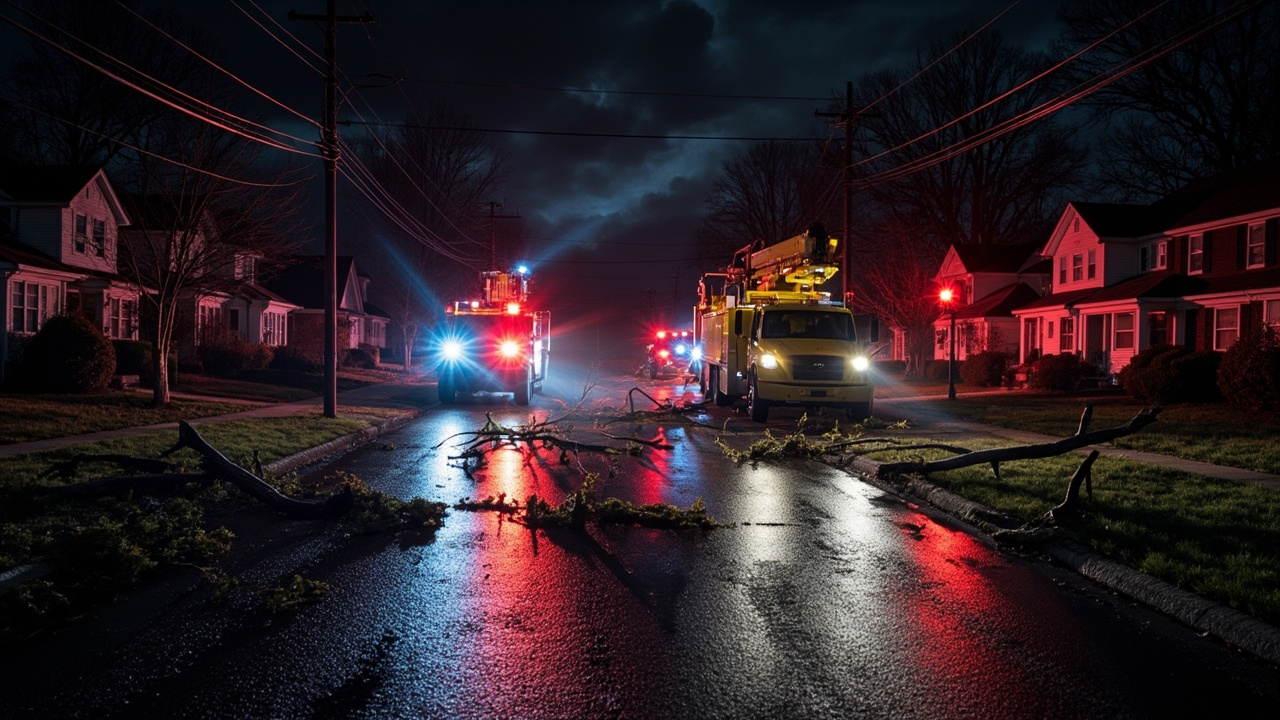
Crews were working to assess damage, clear debris and restore circuits. Fallen trees, broken poles and damaged equipment continued to slow progress, even as remote switching helped in some locations.
Second round threatens more outages overnight
The immediate concern for households was not only the existing damage. Additional severe weather was expected late Tuesday night into early Wednesday, the company said.
That second wave carried the potential to cause additional outages and further slow restoration work. Families planning sleep, medical needs, food storage and communications needed to assume conditions could worsen before they improved.
Duke Energy storm director Andy Cassidy said the organization had been tracking the system and was prepared, but the impact across the region was greater than anticipated. He added that another round of severe weather could create additional challenges.
That assessment matters for household planning. When a utility describes damage as larger than anticipated while a second event is approaching, residents should expect changing restoration timelines rather than a steady return to normal.
The investor version of the same Duke Energy statement, carried by PR Newswire, repeated the overnight forecast and the warning about new interruptions and slower field work.
Why some outages will last longer
Cassidy said damage evaluation was still underway in many areas. He advised customers to be prepared for extended outages, particularly where crews must rebuild sections of the electric system.
Rebuilding differs from resetting a breaker or repairing a single connection. It can involve new poles, wire spans and hardware before a neighborhood circuit can be safely energized.
Duke Energy said lineworkers continued to assess damage and restore power as conditions allowed. The company also used self-healing technology to remotely reroute power around damaged equipment where the grid allowed that switching.
Access was another constraint. In areas where road conditions remained too hazardous for travel, the company said it would send lineworkers, damage assessors and tree trimmers as soon as they could safely reach damaged infrastructure.
Wind limits also affected the pace. For safety, crews cannot perform elevated work in bucket trucks when winds reach 30 mph or higher, which the company said may slow restoration in some areas.
The restoration sequence is designed to return service to the greatest number of customers as quickly and safely as possible while prioritizing facilities that support public health and safety, according to the Duke Energy News Center account.
How restoration updates will reach customers
As damage assessments continued, Duke Energy said it would communicate updates — including estimated times of restoration — through Outage Alerts and its Outage Map.
Customers can also follow progress through the Duke Energy smartphone app available via Apple Store or Google Play.
Households should not rely on a single channel. Phones, tablets and portable chargers should be kept fully charged, a step emphasized in the Prepared For Any Storm guidance published by Union Power. If one device loses charge overnight, a second charged device, car charger or portable battery preserves access to alerts.
Saving the correct reporting number in advance also helps. Duke Energy Ohio/Kentucky asked customers to report hazards to 911 and to the utility at 800.543.5599. The company's 24-hour line was listed as 800.559.3853.
Residents encountering impassable streets should avoid blocking access. Duke Energy asked drivers to move over for first responders and utility trucks. Intersections with nonworking signals should be treated as four-way stops.
Stay clear of lines and debris
The utility's safety message after the Tuesday damage focused on distance and caution around electrical infrastructure.
Stay away from downed or sagging power lines and anything they are touching, operate generators safely and follow other post-storm tips, the company advised.
Union Power's storm guidance reinforces the same principle: stay away from downed power lines and assume they are energized. If a line is encountered, it should be reported immediately to the responsible utility.
Do not attempt to clear energized limbs, lift wires or drive across fallen conductors to check damage. Nighttime conditions, wet ground and blocked sightlines increase contact risk.
For road travel, moving over for work crews protects both drivers and line personnel. Treating dark intersections as four-way stops reduces collision risk when signals have no power.
Households with children and pets should establish boundaries around yards where limbs, fencing or wires may be entangled. Damage assessment continues in many areas, meaning a line that appears inactive may still be part of an active restoration sequence.
Generator and household readiness for an extended night
Operating a generator safely is essential when thousands of homes may be dark through a second storm period.
Duke Energy specifically urged safe generator operation alongside its warning to avoid downed lines. Union Power's Prepared For Any Storm resource provides general precautions that apply to any outage: never operate a generator in any enclosed area because it produces high levels of carbon monoxide and other harmful gases, and never plug a generator into a wall outlet because back feeding can energize power lines and seriously injure utility workers.
Other general steps from that Union Power checklist include making sure a generator is properly sized for essential needs and storing the unit in a dry, secure location when not in use.
Food, water and health supplies deserve the same attention as power. The Union Power checklist recommends stocking a three-day supply of non-perishable foods such as canned goods, energy bars and water, plus essentials like diapers and toiletries.
Hygiene and first-aid readiness also help households shelter through an extended interruption. That guidance suggests having sanitation supplies ready, including towelettes, soap and hand sanitizer, and ensuring a first-aid kit is stocked with pain relievers, bandages and other medical essentials.
Electronics protection is another pre-storm step. Union Power advises protecting electronics and appliances with surge protectors to help guard against damage from power fluctuations and outages.
Households dependent on powered medical equipment, refrigeration for temperature-sensitive needs or electric heat should consider alternate locations if extended outages are announced for their circuit segment. Cassidy's warning about rebuilding in some areas signals that not every neighborhood will return on the same schedule.
What Duke Energy Ohio and Kentucky covers
Duke Energy Ohio & Kentucky, subsidiaries of Duke Energy, provide electric service to 920,000 residential, commercial and industrial customers across a 3,000-square-mile service area, the company reported. They provide natural gas service to 563,000 customers across a 2,650-square-mile area in the two states.
The broader parent, Duke Energy, is described as a Fortune 150 company headquartered in Charlotte, N.C. Its electric utilities serve 8.7 million customers in North Carolina, South Carolina, Florida, Indiana, Ohio and Kentucky and collectively own 55,700 megawatts of energy capacity. Its natural gas utilities serve 1.6 million customers in North Carolina, South Carolina, Ohio and Kentucky.
More information is available at duke-energy.com. The company said it also shares updates on X, LinkedIn, Instagram, TikTok and Facebook, in addition to formal Outage Alerts and the Outage Map highlighted for this event.
For Greater Cincinnati households, the practical message on Tuesday night was direct: expect extended interruptions in the hardest-damaged pockets, prepare for new outages from the overnight system, and check official restoration estimates before assuming power will return by morning.
Sources referenced
- More than 160,000 Duke Energy customers in Ohio and Kentucky remain without power as second round of storms is expected | Duke Energy | News Center (https://news.duke-energy.com/releases/more-than-160-000-duke-energy-customers-in-ohio-and-kentucky-remain-without-power-as-second-round-of-storms-is-expected)
- More than 160,000 Duke Energy customers in Ohio and Kentucky remain without power as second round of storms is expected - PR Newswire (https://www.prnewswire.com/news-releases/more-than-160-000-duke-energy-customers-in-ohio-and-kentucky-remain-without-power-as-second-round-of-storms-is-expected-302849097.html)