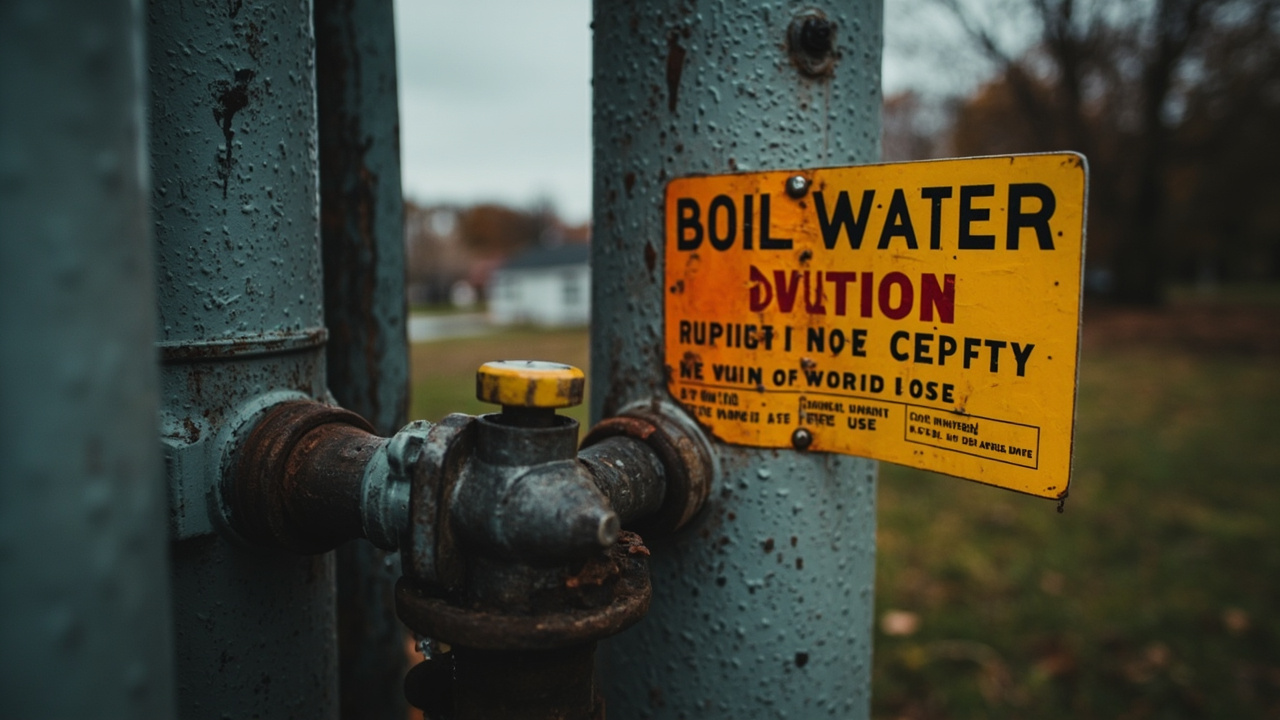
Bottom Line: Boil Tap Water Now if You Are in the Affected Beaver County Area
Residents in a Beaver County, Pennsylvania community must boil tap water before using it for drinking, cooking, making ice, or brushing teeth after water system tests returned a positive result for E. coli bacteria, according to reporting by Pittsburgh-area television station WPXI. The advisory represents an active public health directive, not a precautionary notice, because the contamination trigger — a confirmed E. coli detection — has already occurred.
WPXI reported that local water officials issued the advisory after laboratory results confirmed the presence of E. coli in samples drawn from the distribution system. E. coli in a public water supply can indicate fecal contamination and the potential presence of other harmful organisms, according to the U.S. Environmental Protection Agency (EPA).
What the Advisory Covers and Who Is Affected
The boil water advisory applies to customers connected to the affected Beaver County water system. Residents should treat all water coming from their taps as potentially unsafe until authorities issue an official all-clear.
According to WPXI's coverage, the advisory was put in place after officials received the positive E. coli test result. Water system operators began retesting the supply and investigating the source of the contamination. Customers were notified through direct communication and public announcements.
Households in the advisory zone should follow the guidance below, which reflects the EPA's standard boil water advisory instructions as published on the agency's official boil water advisory page:
- Drinking and cooking water: Bring water to a rolling boil for at least one minute, then let it cool before use.
- Making ice: Use only boiled or bottled water; discard any ice made before the advisory was issued.
- Brushing teeth: Do not use unboiled tap water, even for brushing.
- Bathing and showering: Adults may shower carefully with tap water as long as none is swallowed; use extreme caution with young children and infants, who can accidentally ingest bath water.
- Infant formula and baby food: Prepare with boiled or bottled water only.
- Pets: Provide pets with boiled or bottled water during the advisory period.
What E. Coli in Tap Water Means
E. coli (Escherichia coli) is a group of bacteria, most strains of which are harmless, but its presence in a treated drinking water system is a regulatory violation and an indicator that disease-causing pathogens could have entered the supply. The EPA's Safe Drinking Water Act standards prohibit any detectable E. coli in public water systems.
A positive test does not always mean every tap in the distribution zone is contaminated at the same level, but regulators require the advisory to cover the entire affected service area until follow-up testing clears each zone. The EPA's guidance, referenced on the agency's boil water advisory resource page, notes that utilities must notify customers within 24 hours of a confirmed acute microbial violation.
Steps Water Officials Are Taking
Following the confirmed positive test, Beaver County water system operators initiated investigative and corrective steps. According to WPXI, officials were working to identify the source of the contamination and conducting additional sampling across the distribution system. Increased chlorination or flushing of lines is a standard remediation step utilities take in these situations, per EPA guidance, though the specific remediation measures for this system were not detailed in the WPXI report.
The advisory will remain in effect until a series of consecutive clear test results are returned and reviewed. Utilities typically must collect multiple samples from multiple points in the system before regulators authorize them to lift an advisory.
How Long Boil Water Advisories Typically Last
The duration of a boil water advisory depends on how quickly the source of contamination is identified and eliminated, and how fast retesting can be completed. According to EPA guidance, the process of collecting samples, shipping them to a certified laboratory, and receiving results commonly takes at least 24 to 48 hours per testing round. Some advisories are resolved within a few days; others affecting larger or more complex distribution systems can last longer.
Residents should not assume the advisory has been lifted based on word of mouth or social media alone. The WPXI report and official announcements from the water utility or the Pennsylvania Department of Environmental Protection (DEP) are the authoritative sources for the all-clear.
Household Readiness: What This Advisory Reveals About Water Supply Vulnerability
The Beaver County situation is a practical reminder that municipal water supplies can be disrupted by contamination events with little advance warning. The EPA and emergency management professionals consistently recommend that households maintain a short-term emergency water supply to bridge exactly these situations.
The Federal Emergency Management Agency (FEMA) recommends storing at least one gallon of water per person per day for a minimum of three days, for both drinking and sanitation, according to the agency's Ready.gov resource. A two-week supply is advised for households that want greater resilience.
Commercially bottled water sealed in its original container is safe to use during any boil water advisory without treatment. Households without bottled water on hand should boil tap water and store it in clean, sealed containers.
Where to Get Updates on This Advisory
Residents in the affected area should monitor these official channels for the most current status:
- WPXI (wpxi.com): The Pittsburgh-area station that first reported the advisory and will carry updates as the water system provides them.
- Pennsylvania Department of Environmental Protection (DEP): The state agency with regulatory authority over public water systems in Pennsylvania; its website posts formal violation notices and advisory status.
- Your local water authority: Customers can call the utility's main line directly for the most current sampling results and advisory status.
- Allegheny and Beaver County emergency management offices: Both offices may issue public notifications through local emergency alert systems.
Sign up for your municipality's emergency alert system — such as Wireless Emergency Alerts or a county-level notification service — to receive boil water advisories directly to your phone without waiting for news coverage.
Key Actions for Affected Residents Right Now
The advisory is in effect. Every person in the service area should treat tap water as unsafe for consumption until officials formally lift the notice. Stock bottled water if supplies allow, boil all water used for food preparation and oral hygiene, and confirm the all-clear only through official sources such as WPXI's continuing coverage or the Pennsylvania DEP.
Sources referenced
- Boil water advisory issued for Beaver County community after positive E. Coli test – WPXI (https://www.wpxi.com/news/local/boil-water-advisory-issued-beaver-county-community-after-positive-e-coli-test/article_placeholder)
- Drinking Water: Boil Water Advisory Guidance – U.S. Environmental Protection Agency (https://www.epa.gov/ground-water-and-drinking-water/drinking-water-advisory-communication-toolbox)