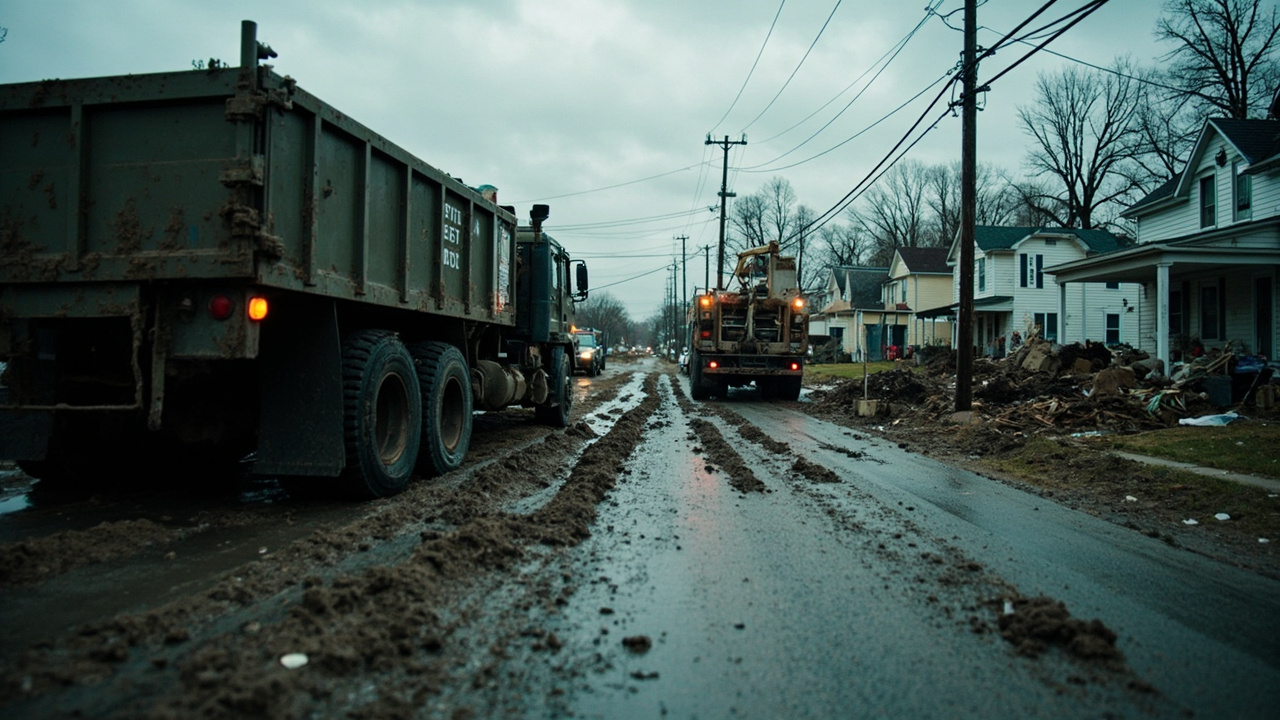
Ohio Storm Tour Signals Next Phase: Damage Checks, Power Restoration, and New Flood Risk
TL;DR: Ohio Gov. Mike DeWine toured wind damage in Franklin County and flood damage in Perry and Muskingum counties on Wednesday after torrential rain and wind triggered emergency declarations, widespread outages, and warnings of more flash flooding that night.
On Wednesday afternoon, Ohio Governor Mike DeWine visited displaced residents and toured areas affected by Tuesday's severe weather in Perry and Muskingum counties, according to reporting in Governor DeWine tours storm damage in Franklin, Perry, Muskingum counties | The Highland County Press. That same Wednesday morning, DeWine also toured parts of Franklin County affected by straight-line wind damage.
The visits capped a fast-moving sequence: a Tuesday afternoon state of emergency in Perry and Muskingum counties, six to seven inches of rain in that area, widespread flooding, and a statewide customer outage total of 171,575 as of 3:30 p.m. Wednesday. With more rain forecast for Wednesday night, DeWine warned that flash flooding remained a major concern and urged residents to take weather warnings seriously and never try to cross high water.
For households, the message was twofold. First, response teams were already in the field. Second, families needed to stay ready for another night of storms while damage assessors began work to measure losses across Perry, Muskingum and other counties hit by flooding and wind.
What the Wednesday tour covered
The Highland County Press account, based on an Ohio Governor's Office release, describes a two-part tour day.
In the morning, the focus was Franklin County, where straight-line winds had damaged parts of the county. In the afternoon, the focus shifted southeast to Perry and Muskingum counties, where flooding had displaced residents and damaged infrastructure, homes and businesses.
DeWine viewed damage in Perry and Muskingum counties by helicopter, according to the Governor's Office photo caption cited in that report. On the ground in those counties, he met with displaced residents.
In remarks quoted in the report, DeWine called the affected areas resilient communities and said they would come back. He identified the next step as assessments to determine the extent of damage across Perry, Muskingum and the other Ohio counties affected by flooding and wind damage.
That assessment step matters for households because documented losses help county and state partners direct aid and support requests for outside assistance. Residents who can safely photograph damage, keep repair receipts, and report conditions to local emergency management give assessors a clearer record to work from.
Why Perry and Muskingum counties were placed under emergency
DeWine declared a state of emergency in Perry and Muskingum counties Tuesday afternoon after storms dropped six to seven inches of rain in the area, according to the Highland County Press report.
The same report says the water caused widespread flooding and significant damage to infrastructure, homes and businesses. No dollar figure or home count for this specific Tuesday event was stated in that release.
The declaration followed a summer in which central and southeastern Ohio had already absorbed repeated storms. A separate Sept. 2 state announcement, detailed in Governor DeWine Requests Presidential Major Disaster Declaration for August Storms, says that from Aug. 10 through Aug. 23, multiple rounds of heavy rainfall and severe storms caused flash flooding and 17 confirmed tornadoes statewide.
That August period, according to the Governor's Office, left at least four people injured, two people dead, and led authorities to make approximately 59 water rescues. Federal and state assessors later found at least 50 homes and businesses destroyed, 806 with major damage, and 475 with minor damage across 23 counties surveyed.
The 23 counties named in that August disaster request were Adams, Athens, Brown, Butler, Champaign, Clark, Clermont, Darke, Fairfield, Franklin, Greene, Hamilton, Highland, Licking, Logan, Madison, Morgan, Muskingum, Perry, Preble, Richland, Shelby, and Washington. Franklin, Muskingum and Perry therefore appear in both the August federal-request list and the September tour.
Power outages and wind damage in Franklin County
The Wednesday tour included Franklin County's wind-damaged areas before the governor headed to the flood zone.
The only statewide outage figure given for that day was 171,575 customers without power as of 3:30 p.m. Wednesday, as reported in the Highland County Press article. The report ties the Franklin County stop specifically to straight-line wind damage, while tying Perry and Muskingum counties to rain-driven flooding.
For households facing an outage after wind damage, state and utility safety guidance consistently stresses caution around electrical hazards. General preparedness advice from Ohio agencies during September is Ohio Preparedness Month emphasizes keeping a family kit ready, rather than scrambling for supplies during an outage.
A Reynoldsburg-focused recovery report, Reynoldsburg families begin long recovery after devastating flooding, illustrates why outage and flood recovery overlap. It describes restoration trucks, dumpsters and cleanup crews remaining in affected neighborhoods two weeks after Aug. 20 flooding in parts of Reynoldsburg, with residents clearing damaged homes and facing mold.
That longer recovery picture is relevant to Franklin County households now dealing with fresh wind impacts on top of August flooding. Franklin County Emergency Management and Homeland Security Deputy Director Thomas Page Jr., quoted in the Reynoldsburg report, said the county was working with state and federal partners in hopes of bringing additional relief.
Flash-flood threat Wednesday night
The most urgent household warning on Wednesday was about what could happen that night.
DeWine warned that as more rain moved into Ohio that night, flash flooding was still a major concern, according to the Highland County Press. The National Weather Service was forecasting more storms throughout Ohio that night that could cause flash flooding.
In his quoted warning, DeWine said, “Ohioans should continue to remain vigilant and take all weather warnings seriously,” and added, “If you encounter high water, please do not attempt to cross it.”
That instruction matches National Weather Service flash-flood bulletin language documented in early-September alerts. A Sept. 3 Flash Flood Warning for Washington County stated: “Turn around, don't drown when encountering flooded roads. Most flood deaths occur in vehicles.” A Sept. 3 extended Flash Flood Warning covering southeastern Columbiana County and nearby Pennsylvania counties added: “Be especially cautious at night when it is harder to recognize the dangers of flooding.”
Nighttime risk is a core household planning point. Flooded roads can hide washouts, and headlights may not reveal water depth. Families with evening commutes, school activities or shift work should plan alternate routes, delay nonessential travel during warnings, and never move barricades.
Who was helping on the ground
The Highland County Press report lists four state responders actively assisting local authorities at that time, plus the state emergency management agency in a coordination role.
Members of the Ohio National Guard, Ohio Department of Natural Resources, Ohio Department of Transportation, and Ohio State Highway Patrol continued to actively assist local authorities, while the Ohio Emergency Management Agency remained engaged with county and state partners to assist local communities with their needs.
The earlier August-response summary in the Governor's disaster-declaration announcement provides more detail on what those roles typically involve, and households can expect similar tasks in the September response. It says the Ohio Emergency Management Agency operated the State Emergency Operations Center, provided communications assets, and assisted counties with technical guidance, logistics and damage assessments in the field.
In that August summary, the Ohio Department of Transportation supported debris-removal efforts in Perry and Muskingum counties, provided aerial imagery of flooding on Interstate 70, assisted public information operations at the Perry County Emergency Operations Center, and helped deliver pallets of bottled water. The Ohio Department of Natural Resources coordinated debris-removal operations, conducted levee and dam safety inspections, and deployed swift-water rescue teams to high-risk areas.
The same summary says the Ohio State Highway Patrol provided law enforcement support, traffic management and aviation resources; the Ohio National Guard transported water and supplies to distribution sites, including direct deliveries to residents with accessibility needs, and assisted debris-removal operations in Muskingum County; and the Ohio Department of Job and Family Services coordinated mass-care operations with shelter partners, including the American Red Cross.
For local residents, that structure means help often arrives through county emergency management first, with state teams backing up traffic control, rescue, debris clearing and shelter support.
Federal aid request behind the damage assessments
DeWine's call for damage assessments on Wednesday connects directly to a Sept. 2 request for federal help for the August storms.
According to Governor DeWine Requests Presidential Major Disaster Declaration for August Storms, DeWine sent a letter to President Donald Trump requesting a Presidential Major Disaster Declaration after severe storms, flooding, straight-line winds and tornadoes battered Ohio in August.
The request asked for activation of the Federal Emergency Management Agency's Individual Assistance Grant Program, which includes grants for temporary housing and home repairs, rental assistance, replacement of personal property, crisis counseling, disaster unemployment assistance, and disaster legal services. It also requested Small Business Administration low-interest loans to cover certain uninsured property losses and activation of FEMA's Hazard Mitigation Grant Program to help reduce future disaster losses.
Ohio Emergency Management Agency Executive Director Sima Merick, quoted in that announcement, said federal assistance would support local and state efforts and help advance long-term recovery for homeowners, renters and businesses.
As of the Sept. 2 announcement, the request was a request — not an approval. Households should therefore track county and Ohio Emergency Management Agency updates for any change in status, eligibility areas, and application instructions, rather than assuming aid is already available.
What Reynoldsburg shows about household recovery
Franklin County households do not need to look far to see what flood recovery entails.
The Sept. 3 report Reynoldsburg families begin long recovery after devastating flooding describes flooding on Aug. 20 that pushed about four feet of water into Vicki Miller's basement within hours, damaging utilities, appliances and personal belongings and totaling a car parked on the street.
The report says a flood resource center at Reynoldsburg Community Church was connecting residents with agencies and organizations that could help them navigate next steps. The center brought together the American Red Cross, Salvation Army, Franklin County agencies and City of Reynoldsburg representatives, with information about available assistance, recovery resources and services.
Officials said dozens of families had already used the resource center, with more expected in coming days. Reynoldsburg Mayor Joe Begeny, quoted in the report, said mold remediation was now one of the biggest hurdles, with many homeowners facing costly repairs after waters receded.
That experience points to three practical household steps after any flood: dry out quickly where it is safe to do so, document everything before discarding items, and use an official resource center when one opens rather than relying only on word of mouth.
How to use Preparedness Month this week
The storm tour fell during Ohio Preparedness Month, coordinated by the Ohio Emergency Management Agency.
According to September is Ohio Preparedness Month, the State of Ohio designates September for the campaign, and the 2026 theme is “Prepare Your Family.” The weekly schedule lists Sept. 1-5 as Preparedness Kits for the Family and Sept. 6-12 as Plan for Your Family.
Ohio Emergency Management Agency Executive Director Sima Merick, quoted in that announcement, said the goal was to encourage families to stay informed, stay connected, and take simple steps that can help them be prepared, adding that building awareness within a household is one of the most effective ways to keep loved ones safe.
For the week of the tour, the “Plan for Your Family” focus fits directly: confirm how household members will reach each other if cell service fails, pick a meeting place, list caregivers and emergency contacts, and make sure everyone knows to heed flash-flood warnings and avoid high water.