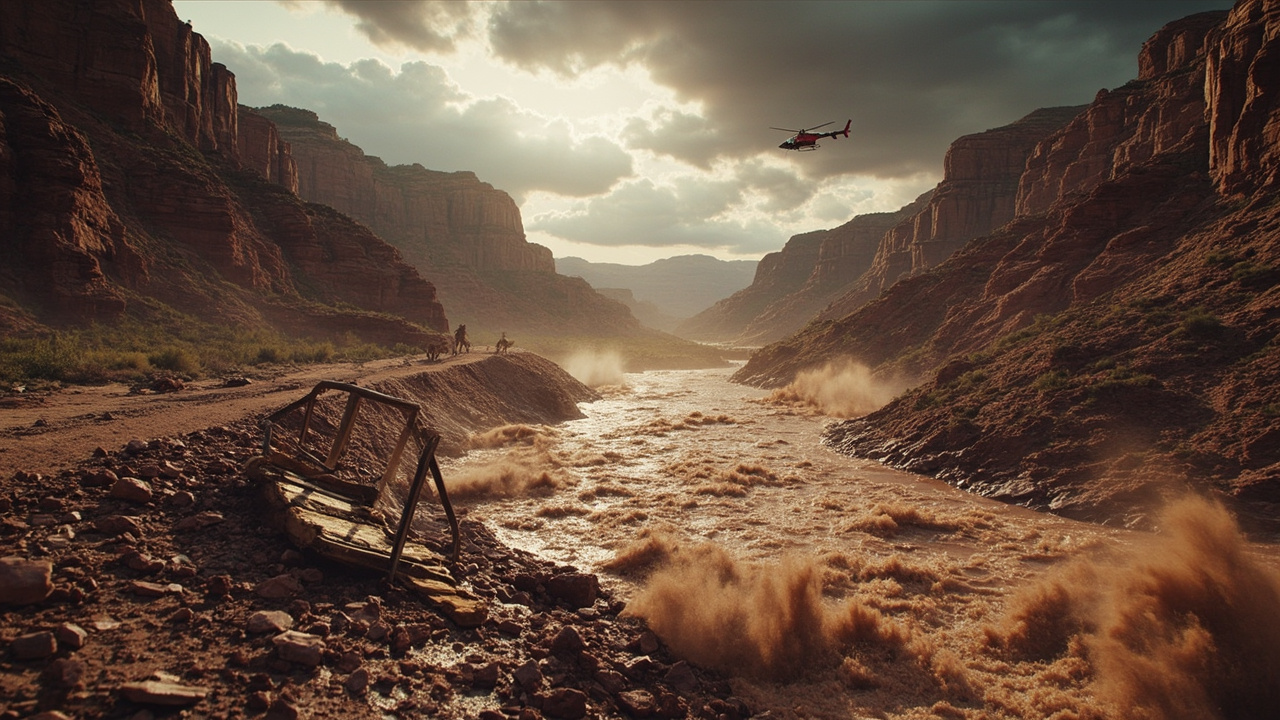
TL;DR: A significant flash flood struck Bright Angel Canyon and the Phantom Ranch area on August 29, beginning at approximately 2:30 p.m., prompting helicopter-assisted evacuations, full closures of Phantom Ranch and the North Kaibab Trail, and a public appeal to account for approximately 15 individuals who may be missing or unaccounted for.
Grand Canyon Flash Flood on Aug. 29 Triggers Evacuations and Inner-Canyon Closures
A significant flash-flood event occurred in Bright Angel Canyon and the Phantom Ranch area on August 29, beginning at approximately 2:30 p.m., according to the National Park Service release titled Significant Flash Flooding Closes Phantom Ranch and North Kaibab Trail.
The same release states that Grand Canyon National Park staff, in coordination with the Arizona Department of Public Safety, continued evacuation and response efforts into the morning of August 30 while working to account for individuals who may have been in the affected area.
As of the morning of August 30, 62 individuals had been evacuated from Phantom Ranch and the lower North Kaibab Trail, according to that National Park Service release.
Additional individuals were scheduled to be evacuated on the morning of August 30 from Cottonwood Campground and Phantom Ranch in coordination with the National Park Service and Arizona Department of Public Safety.
Evacuees were being transported to the Maswik Lodge Cafeteria on the South Rim, where the American Red Cross was coordinating assistance.
No injuries had been reported as of the latest available information cited in that release.
In a separate National Park Service release titled Public Assistance Requested to Account for Individuals Following Grand Canyon Flash Flood, the agency said it was asking the public to provide information for approximately 15 individuals who may be missing or unaccounted for following the August 29 event.
That appeal covers hikers, backpackers and campground reservation holders who were in the inner canyon along the Bright Angel Creek corridor on August 29.
Where the flooding hit
The affected area described by the National Park Service centers on Bright Angel Canyon and the Phantom Ranch area.
The flood affected Phantom Ranch, Bright Angel Campground, the Phantom Ranch Canteen and cabins, and the corridor along Bright Angel Creek.
The agency also identifies the North Kaibab Trail from the North Kaibab Trailhead to Phantom Ranch as part of the closed area.
Travelers in the area known as “the Box” north of Phantom Ranch are specifically included in the agency’s request for information.
The release also identifies the lower North Kaibab Trail and Cottonwood Campground as evacuation locations during the response.
The Colorado River is described as affected by metal structures and debris entering the river.
Evacuations underway with state and Red Cross support
The evacuation operation described on August 30 involved both ground and air resources coordinated by the National Park Service and the Arizona Department of Public Safety.
The 62 individuals evacuated as of the morning of August 30 came from Phantom Ranch and the lower North Kaibab Trail.
The follow-on evacuations planned for that morning were to include people at Cottonwood Campground and additional people at Phantom Ranch.
The designated reception point for evacuees was the Maswik Lodge Cafeteria on the South Rim.
At that location, the American Red Cross was coordinating assistance for people brought out of the canyon.
The National Park Service said Grand Canyon National Park staff, in coordination with the Arizona Department of Public Safety, were continuing evacuation and response efforts and working to account for individuals who may have been in the affected area.
Households with members hiking or backpacking in the inner canyon along the Bright Angel Creek corridor on August 29 were asked to help investigators confirm locations and welfare.
The agency also asked anyone who had a campground reservation in the affected corridor to provide information, even if they were not certain the party had entered the canyon.
Help investigators account for hikers and campers
The National Park Service Investigative Services Branch, identified by the acronym ISB, is receiving tips about people who may have been in the affected corridor.
According to the release titled Public Assistance Requested to Account for Individuals Following Grand Canyon Flash Flood, anyone who knows of hikers or backpackers who were in the inner canyon along the Bright Angel Creek corridor on August 29 should contact the ISB Tip Line.
The request also applies to anyone who knows of a person who had a campground reservation in the affected corridor.
The agency specifically lists travel along the North Kaibab Trail from the North Kaibab Trailhead to Phantom Ranch as travel to report.
Staying at Bright Angel Campground is specifically listed as a stay to report.
Traveling or staying in the area known as “the Box” north of Phantom Ranch is specifically listed for reporting.
The NPS ISB Tip Line number provided is 888-653-0009.
The agency also provides an email option described as e-mail us for submitting information to investigators.
When submitting a tip, the agency asks for any information about the individual, including name, approximate location, travel plans, group size, clothing or backpack description, or when they were last known to be in the area.
People submitting tips do not have to provide their own name.
The agency said it was working to account for individuals who may have been in the affected area, and that permit and reservation information alone may not confirm who was on the trail during the flood window.
Trail, campground and bridge closures in effect
Phantom Ranch, Bright Angel Campground, the Phantom Ranch Canteen and cabins, and the entire North Kaibab Trail from the North Kaibab Trailhead to Phantom Ranch are closed until further notice.
The Black Bridge and Silver Bridge crossing the Colorado River are also closed until further notice.
There is currently no estimated reopening date for these areas, according to the National Park Service.
The agency said other inner canyon closures may be necessary as assessments continue.
For the latest trail and closure information, the agency directs visitors to the park’s Key Hiking Messages webpage.
The closures reflect both active response needs and damage that eliminates normal travel routes.
The agency said Grand Canyon National Park staff are continuing to assess damage to trails, bridges, utilities, facilities and other infrastructure.
Households with upcoming hiking or backpacking plans in the inner canyon are directed to check that closure information before traveling, because conditions and closure boundaries can change.
Bridges and creek crossings destroyed
The flash flood resulted in significant impacts to infrastructure throughout Bright Angel Canyon, according to the National Park Service.
Nearly all footbridges spanning Bright Angel Creek were destroyed, eliminating hiker access across the creek.
Remnants of stone bridge pylons remain along Bright Angel Creek following a footbridge destroyed on August 29, as described in the photo caption accompanying the closure release.
The loss of those crossings means hikers cannot cross the creek in the normal locations, even where trail tread remains.
Damage assessment covers trails, bridges, utilities, facilities and other infrastructure, and the agency said staff are continuing that work.
No estimated reopening date has been provided while that assessment continues.
The agency also warns that additional thunderstorms and heavy rainfall could result in additional flash flooding, debris flows, rockfall and changing trail and river conditions.
That changing-conditions warning means trails and river conditions described in one update may not match conditions encountered later the same day.
Colorado River closed to traffic
The Colorado River is currently closed to river traffic until further notice due to metal structures and debris entering the river.
River parties already in the canyon are receiving direction through river operations rangers and the Grand Canyon River Alert system.
Visitors with upcoming river trips should contact their commercial outfitter or NPS River Permits for trip-specific information.
That trip-specific guidance is important because put-in points, schedules and river conditions vary by party.
The river closure remains in effect while debris hazards are addressed and while trail and river conditions are reassessed.
The agency said additional thunderstorms and heavy rainfall are possible, which could further change river conditions.
Water system damage prompts conservation plan
The flooding caused extensive damage to infrastructure in the inner canyon, including the Transcanyon Waterline, which supplies water from the canyon for use in the park, according to the National Park Service release titled Grand Canyon National Park to Close Overnight Hotel Accommodations Beginning August 31.
The agency said the waterline is currently not operational, leaving the park with limited water reserves and requiring significant water conservation measures to ensure available supplies can be maintained.
In response, the park announced Stage 4 water restrictions on the South Rim beginning at noon on August 31.
Effective August 31, all park concessions will halt overnight accommodations, including hotel facilities operated by Xanterra, such as El Tovar, Bright Angel Lodge, Maswik Lodge, and Phantom Ranch, as well as Delaware North’s Yavapai Lodge and Trailer Village.
Overnight hotel accommodations located outside the park in the town of Tusayan will not be impacted by changes in park operations.
Only dry camping will be permitted, and spigot access at campgrounds on the South Rim will be turned off, though faucets in bathrooms will remain operational.
No fires will be allowed on the South Rim and inner canyon areas, with fire restrictions prohibiting all wood burning and charcoal fires, including campfires, warming fires, and charcoal barbeques.
The park will remain open for day use, and all South Rim food and beverage services, the Grand Canyon Clinic, and the Post Office will remain open, with some operations possibly operating at reduced hours.
Residents and visitors are asked to help conserve water by limiting showers to five minutes or less, turning off faucets while shaving or brushing teeth, flushing toilets selectively, washing laundry with full loads, and reporting leaks to the appropriate offices.
More storms possible
Additional thunderstorms and heavy rainfall are possible on August 30 and Monday, which could result in additional flash flooding, debris flows, rockfall and changing trail and river conditions, according to the National Park Service.
That forecast means search, evacuation and damage-assessment work faces possible interruption.
It also means washes, narrow canyons and burn-affected slopes near the response area can flood again with little warning.
Households in or near the park should monitor official park alerts and the Grand Canyon River Alert system if already in the canyon, and should not enter closed trails, campgrounds, bridges or river segments to check conditions.
Anyone who knows of a hiker, backpacker or campground reservation holder in the Bright Angel Creek corridor on August 29 should contact the NPS Investigative Services Branch Tip Line at 888-653-0009 and provide travel plans, location details and descriptions to help investigators complete the accounting effort.
Sources referenced
- Significant Flash Flooding Closes Phantom Ranch and North Kaibab Trail - Grand Canyon National Park (U.S. National Park Service) (https://home.nps.gov/grca/learn/news/significant-flash-flooding-closes-phantom-ranch-and-north-kaibab-trail.htm)
- Public Assistance Requested to Account for Individuals Following Grand Canyon Flash Flood - Grand Canyon National Park (U.S. National Park Service) (https://home.nps.gov/grca/learn/news/public-assistance-requested-to-account-for-individuals-following-grand-canyon-flash-flood.htm)