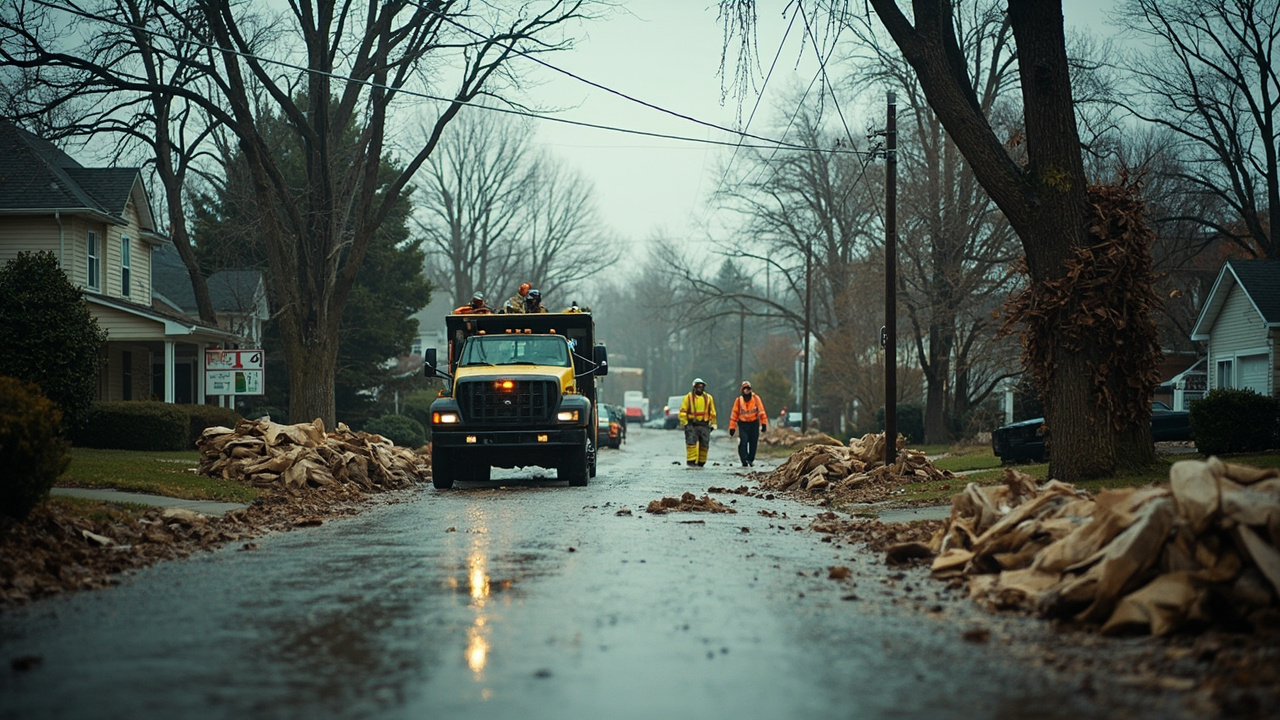
TL;DR: Indiana households hit by the Aug. 11, 2026 derecho, tornadoes and floods should use shelters, report damage through 211, and follow official return-home safety steps while federal help remains limited to direct government support.
What Indiana families face after Aug. 11 storms
Indiana's household recovery challenge on Aug. 19, 2026, centers on flooding that followed a fast-moving severe weather system, not on federal checks to residents. According to the Indiana Department of Homeland Security's "DHS: August 2026 Disaster" hub, a thunderstorm system preliminarily classified by the Storm Prediction Center as a derecho moved from Illinois into northwest and north-central Indiana during the morning and afternoon of Aug. 11, 2026.
That system produced extreme straight-line winds, at least two tornadoes, large hail and flash flooding. As it tracked south and east through the late morning and afternoon, central Indiana reported additional damage, including a broad area of power outages and many reports of tree damage.
For households, the second phase mattered more. The same event brought repeated rounds of heavy precipitation, shifting concern to excessive flooding early on Aug. 12. According to the state hub, some areas received 6-9 inches of rain, with more rain in the days that followed. Multiple rivers reached major flood stage, while road closures and localized evacuations were reported because of flooding.
The timeline matters for planning. The State Emergency Operations Center increased staffing for coordination and resource support on Aug. 12, rising to Level III Emergency Conditions, according to the state's Aug. 18 media status update. Gov. Mike Braun issued a statewide disaster declaration for severe weather and flooding on Aug. 13, 2026.
What the federal emergency declaration does and does not do
A federal Emergency Declaration is now in effect, but it does not open FEMA aid to homeowners and renters. According to FEMA's page for "EM-3651-IN — Indiana Severe Storms, Straight-line Winds, Tornadoes, and Flooding," the incident period began Aug. 11, 2026 and was continuing, with a declaration date of Aug. 15, 2026.
On Aug. 15, 2026, President Trump approved an Emergency Declaration for Indiana to let FEMA directly support the ongoing flood response for 53 counties, according to the state status update. Those counties are Allen, Bartholomew, Boone, Carroll, Cass, Clinton, Dearborn, Decatur, Delaware, Fayette, Fountain, Franklin, Fulton, Grant, Hamilton, Hancock, Harrison, Hendricks, Henry, Jasper, Jay, Jefferson, Jennings, Knox, Kosciusko, Lake, LaPorte, Madison, Marion, Marshall, Miami, Morgan, Newton, Orange, Owen, Parke, Perry, Pike, Porter, Pulaski, Randolph, Ripley, Rush, Shelby, St. Joseph, Starke, Tipton, Union, Wabash, Warren, Washington, Wayne and White counties.
With that declaration, FEMA can provide direct federal assistance, including specialized teams, equipment, supplies and technical support, as needed, to help Indiana protect lives, restore essential services, clear roads for emergency access and keep communities safe. FEMA may also coordinate support from other federal agencies, including the U.S. Army Corps of Engineers and other federal partners, for response and recovery work.
The limit is explicit. The state update said federal assistance was not available to homeowners and renters at that time. The Emergency Declaration authorizes emergency protective measures limited to Direct Federal Assistance only that state and local governments are unable to perform to save lives and protect public health and safety. That federal support includes work such as emergency route clearance, search and rescue, emergency temporary power restoration and emergency communication support for first responders.
An emergency declaration also does not block a later request for a major disaster declaration for other unmet needs, based on assessments of impacts and whether impacts exceed state and local recovery capabilities. The update noted that local and state per-capita indicators must be met. The only resource being used under the Emergency Declaration at the time of the Aug. 18 update was a U.S. Army Corps of Engineers deployment to Carmel, Indiana, to assist with infrastructure needs.
State and county response underway
Nineteen counties had issued county emergency declarations by Aug. 18, according to the same state status update. The listed counties were Carroll, Cass, Dearborn, Delaware, Fayette, Franklin, Hamilton, Henry, Lake, LaPorte, Madison, Marion, Marshall, Porter, Pulaski, Putnam, Starke, Tipton and Wayne counties. When a county issues such a declaration, its board of commissioners has determined that conditions may cause emergency services to be impacted or delayed, starting county emergency plans and allowing the state to provide additional resources.
State-level support involved more than the Indiana Department of Homeland Security. Other participants included the Indiana Department of Transportation, Indiana Department of Health, Indiana Department of Environmental Management, Indiana Utility Regulatory Commission, Indiana State Police, Indiana Department of Natural Resources, Indiana Department of Correction, Indiana National Guard, the American Red Cross, the National Weather Service and Federal Emergency Management Agency Integration Team members.
Counties request state help through missions when community needs exceed local capabilities. The state had completed 34 mission requests by Aug. 18, with 14 missions deployed and in use. Completed missions included route clearance in Lake and LaPorte counties, a high-water vehicle for Marion County, an incident management team for Franklin County, a mobile radio repeater system for a tower site in Delaware County, swift-water resources in Wayne County, and sandbags in Rush and Madison counties.
Deployed missions included an oxygen trailer in LaPorte County, traffic assistance in Madison County, charging stations for Fayette County and animal sheltering for Franklin County. Indiana Department of Homeland Security and FEMA personnel began aerial joint preliminary damage assessments across the state on Aug. 18. Those joint assessments are the first step to collect information needed to request a major disaster declaration.
Shelters, power outages and where to go
Thirteen shelters were open statewide in the Aug. 18 update, with eight operated by the American Red Cross and five partner shelters, serving a total population of 262. The Red Cross locations listed were YWCA-Gary at 150 W 15th Ave in Gary, Community of Hope Church at 1968 W. Main St. in Muncie, Rangeline Community Center in Anderson, Salvation Army at 1615 Meridian St. in Anderson, WT Services Center at 8401 Westfield Blvd. in Indianapolis, Wayne County Fairgrounds at 861 N Salisbury Rd. in Richmond, Laurel Community Center at 218 N Clay St. in Laurel, and Community Fellowship Church at 505 Bielby Rd. in Lawrenceburg.
Households needing shelter can use the Indiana Department of Homeland Security shelter map and Red Cross tools. Reporting by Free Press Indiana on Aug. 14 explained that people can find Red Cross shelters through its website, mobile app or by calling 1-800-RED CROSS, with listings showing addresses, hours and pet rules. That reporting also noted that township trustees may be able to help people forced from homes.
Power remained a major household risk. The statewide outage count was 98,824 as of 2 p.m. on Aug. 18, with most outages in northwest Indiana. For cooling needs during outages, the Governor's "Hoosier Storm Recovery Resources" page directed residents to cooling centers listed at on.in.gov/coolingcenters. The same state resource page listed temporary housing grants to move from emergency shelters into hotels, apartments and other temporary accommodations through a call to 317-232-2222.
Report damage even if aid is not yet open
Reporting damage is separate from applying for aid, but officials say reports guide recovery decisions. Indiana 211 is activated in multiple counties, according to the Governor's resource page. Residents can call 211 or 866-211-9966 or use the 211 website to report property damage.
That distinction is important for household expectations. Damage reports help assessment crews collect required information accurately and efficiently for state and federal funding decisions. They do not enroll a household in assistance.
Travel safety should be checked before driving to check property, get supplies or seek shelter. Free Press Indiana advised residents to review state travel advisories from the Indiana Department of Homeland Security and to check closures and safety information at 511in.org. Floodwater can hide road damage, and saturated areas can flood again as rain falls where rivers are already high.
Households with food losses tied to storms or outages may have a narrow paperwork window if they receive nutrition benefits. According to the Governor's resource page, households that receive SNAP benefits and lost food because of storm damage or power outages may qualify for replacement benefits. Affected people must submit an affidavit for replacement benefits within 10 days of the event, with the loss verified because of power outage, flood or another cause. The document may be uploaded to the FSSA Benefits Portal, faxed to 888-436-9199 or dropped off at a Division of Family Resources office. Residents in Lake and Porter counties had until Aug. 31 to report food loss and request replacement benefits under an extension tied to a waiver approved by federal food and nutrition officials.
Returning home safely after flooding
Do not return until water has receded and local officials say it is safe. That guidance from the Federal Emergency Management Agency was summarized in Free Press Indiana's Aug. 14 household guide. In an emergency, call 911.
Before entering, look for structural harm such as sagging or leaning walls, roofs and ceilings. Make noise as you approach because animals may be inside, a precaution attributed to Purdue Extension guidance. If a home may flood, turn off power before leaving when it is safe to do so.
Electrical safety requires extra caution after water entry. When returning, keep gas and electricity shut off before going inside. Unplug flooded appliances. Have an electrician inspect the home before restoring power.
Documentation helps any later insurance or aid review. Make a list of harm to the home and property. Take pictures or video of flood damage inside the home, including serial numbers for appliances, before cleaning up. Keep receipts for emergency spending, including hotels, food and cleanup supplies.
Mold and food safety steps should start quickly. Throw out or dry items that can grow mold, such as cushioned furniture, pillows and clothing. Throw out food that may have contacted floodwater or spoiled. Most homeowners insurance does not cover water damage from flooding, but a claim can be filed with flood insurance, while comprehensive auto insurance will typically cover vehicle flood damage.
For insurance questions, the state resource page directed residents to the Indiana Department of Insurance at 317-232-2385 or IN.GOV/IDOI. For possible scams, most commonly tied to insurance, residents can file a complaint at indianaconsumer.com or call the Attorney General's office at 1-800-382-5516.
State emergency aid also exists outside the federal system, though eligibility depends on local declarations and uninsured loss at a primary residence. The Governor's page said Hoosiers can get up to $5,000 in emergency aid grants through the State Disaster Relief Fund for basics such as clothing and food while displaced, with access through Indiana DHS at 317-232-2222.