TL;DR: A fast-moving Texas ranchland fire forced Tuesday evacuations while crews in Reno held a destructive blaze at 27% containment.
Texas ranchland fire explodes, Nevada crews gain ground
Evacuations were ordered Tuesday in rural north central Texas where a wildfire that started early Monday afternoon tore across more than 78 square miles of ranchland, while firefighters near Reno, Nevada, stopped new growth of a blaze that destroyed more than 30 homes, according to PBS News.
The contrast defines the national picture on Aug. 25, 2026: one community fleeing in the night as flames jumped creeks and rivers, another counting damaged houses and waiting for permission to return. Both events unfolded during a period when the National Interagency Fire Center reported a dozen new large fires on Sunday alone and more than 50,000 wildfires so far this year, the most for the same period in a decade.
In Texas, the Ross Fire moved through lightly populated areas in two counties about 60 miles west of Fort Worth. Officials in Palo Pinto County reported at least five structures destroyed and only slight containment as the fire churned through dry grass and brush. In Nevada, the Hawk Fire held steady at about 23 square miles after burning out of control Sunday, with containment reaching 27% on Monday and the number of people under evacuation orders and warnings falling to about 63,000 from more than 90,000, authorities said at an afternoon briefing.
For households, the message from officials in both states was consistent: leave when told, stay out of closed roads, and use designated shelters and animal-holding sites rather than trying to ride out shifting winds and triple-digit heat.
Ross Fire rips through Palo Pinto County ranch country
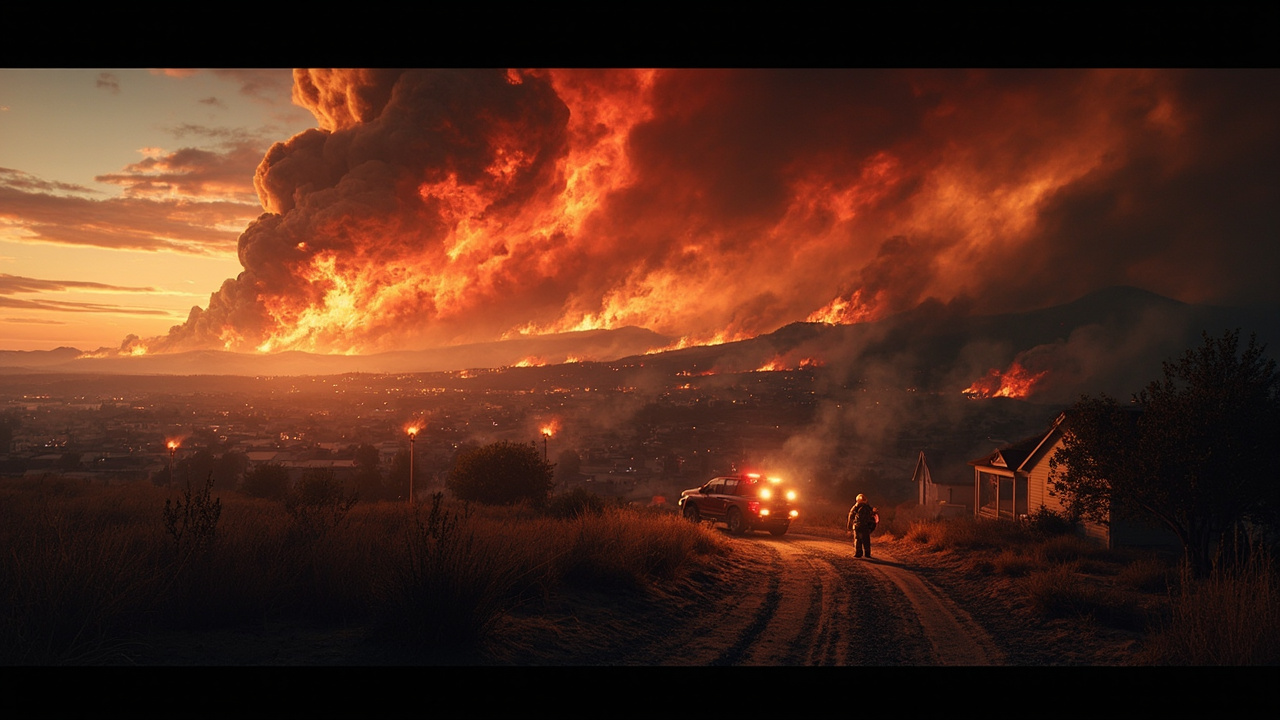
The Ross Fire began early Monday afternoon and within hours covered more than 78 square miles, or about 200 square kilometers, across two counties in north central Texas, according to PBS News.
The location, about 60 miles west of Fort Worth and about an hour outside the city, is lightly populated ranch country. That did not reduce the threat. Emergency officials said perfect fire conditions allowed rapid expansion, and crews saw flames cross creeks and rivers that might otherwise act as natural breaks, according to reporting by weather.com.
Fire Chief Danny Watkins, with Palo Pinto County's emergency services district, described the challenge in stark terms, saying crews had thrown everything available at the blaze while seeing minimal effect. Emergency officials expected the fire to keep growing Tuesday as daytime temperatures climbed.
Middle-of-the-night evacuations were ordered in parts of the fire zone. Authorities opened evacuation centers for displaced residents. Some schools delayed or canceled classes Tuesday, and several schools closed entirely, as officials worked to keep families and buses away from smoke and emergency traffic.
Ranchers and a livestock commission offered barns to temporarily hold evacuated animals, a step that reflected the agricultural character of the area and the need to move cattle, horses and other livestock quickly when trailers and roads were still passable.
Gov. Greg Abbott announced that the Federal Emergency Management Agency approved a Fire Management Assistance Grant for the Ross Fire, a federal cost-share mechanism for fires that threaten destruction. The exact cause remained under investigation.
Heat, wind and overnight temperatures drive Texas risk
The Fort Worth area faced triple-digit heat, low humidity and winds up to 25 mph with even stronger gusts, a combination that pushes flames across breaks and lofts embers ahead of the main front, according to weather.com.
Overnight offered little relief. Temperatures were expected to stay in the low 80s, giving the fire almost no break from heat and allowing dry fuels to remain receptive. Wednesday was forecast to bring more of the same, with highs near 108 degrees.
That outlook shaped household planning. Emergency officials warned the blaze could continue growing as temperatures climbed through the week. Residents who were not under orders were asked to monitor official updates, keep vehicles fueled and ready, and avoid blocking rural roads needed for engines and evacuating trailers.
The Texas blaze was not isolated. Wildfires were reported across the South and western United States in recent days as extremely dry conditions persisted, and the National Interagency Fire Center said a dozen new large fires were reported Sunday alone.
Hawk Fire holds at 23 square miles near Reno
In Nevada, firefighters made measurable progress against the Hawk Fire in the Sierra Nevada foothills near Reno after it burned out of control Sunday, according to The Associated Press reporting republished by DTNPF.
Containment reached 27% on Monday, with no new growth reported at an afternoon briefing. The fire held steady at about 23 square miles, or about 60 square kilometers, after rapid expansion over the weekend. U.S. Forest Service District Ranger Matt Zumstein told reporters that crews were making progress.
The fire began Saturday near the California state line and exploded in size Sunday as it spread through the Peavine Peak area of the Humboldt-Toiyabe National Forest. Much of the area that burned was sagebrush and grass, fuels that carry flames quickly under wind.
At least 32 homes burned and six were damaged, but authorities said those numbers were sure to rise as assessment teams surveyed charred neighborhoods. Earlier counts had cited more than 30 homes destroyed. At least seven people — three first responders and four civilians — were injured.
Reno Mayor Hillary Schieve said the speed at the height of the run had left her fearing the worst, describing how flames lit up hillsides in a way she had not seen before and took breath away in the worst way.
Evacuation numbers fall, but reentry remains dangerous
The number of Reno-area residents under evacuation orders and warnings dropped to about 63,000 on Monday, down from more than 90,000 when the blaze mushroomed over the weekend, according to officials.
Schools across Washoe County were closed Monday because of evacuations and to keep roads clear for emergency crews. Nevada's governor declared a state of emergency in the county and mobilized the National Guard to help with aerial firefighting and protecting evacuated neighborhoods northwest of downtown Reno.
Washoe County Sheriff Darin Balaam said he understood frustration among residents blocked at roadblocks who could not return home, but warned the danger was not over. He said a light breeze and a single ember could restart runs through dry brush toward newly developed neighborhoods.
Winds had eased compared with the weekend, yet officials remained concerned gusts could push flames through dry brush into dense areas of Nevada's largest city outside metro Las Vegas. Firefighters also contended with hot temperatures and low humidity.
Reno is home to about 280,000 people and is known for casinos and as a gateway to Lake Tahoe, North America's largest alpine lake. It sits southwest of Nevada's Black Rock Desert, site of the annual Burning Man festival set to begin the following Sunday. Organizers on Monday asked attendees not to take hotel rooms and other resources away from evacuees and to treat neighbors, first responders, hospitality workers and everyone affected with patience and care.
Hawk Fire evacuees sheltering at the Reno-Sparks Convention Center received donated clothing after many fled without enough clothes or other essentials, underscoring how little time some households had when the fire exploded.
Human cause suspected in Nevada, third fire in two weeks
Fire officials blamed human activity for the Hawk Fire, saying it was either intentionally set or accidental, according to PBS News.
Officials said this was the third large wildfire in rugged terrain north of Reno in the past two weeks, all caused by human activity. They had not determined whether the Hawk Fire was intentionally set or accidental.
That finding matters for household readiness because human-caused starts near trails, roads and open space can grow without lightning warnings. Residents near the wildland edge had little time to evacuate after the fire exploded Sunday, with some returning from weekend activities to find their streets in an evacuation zone.
Videos posted on social media showed smoldering ruins of homes and cars, with only a scorched basketball hoop still standing in one scene, illustrating how quickly ember-driven runs damaged subdivisions close to brush.
One resident, 53-year-old Crystal Hallock, lost her home for a second time in less than a decade after moving into a rebuilt house in 2019 following an earlier electrical fire. She fled Saturday with children, grandchildren and pets as smoke and flames showed on a nearby mountaintop, while her ex-husband tried to protect the property and a vintage Cadillac with a garden hose before escaping when smoke darkened visibility and made breathing difficult.
What households near active fires should do now
Officials in both states pointed to the same practical steps: follow evacuation orders immediately, use public shelters when needed, keep roads open for responders, and arrange off-site shelter for pets and livestock before smoke thickens.
In Texas, that meant using evacuation centers opened by authorities and accepting barn space offered by ranchers and the livestock commission for animals that needed to be moved. In Washoe County, it meant honoring closures Monday, staying out of evacuated neighborhoods northwest of downtown Reno, and checking school and county updates before traveling.
Households downwind were urged to limit unnecessary driving in smoky corridors, keep essential documents, medications, phone chargers and clothing ready to carry, and plan where animals would go if orders expanded. Evacuees at the Reno-Sparks Convention Center who left without enough clothing relied on donations, a reminder to pack extra layers even during summer heat when nights in shelters and smoke exposure create added needs.
No injuries had been reported early in the Texas evacuations covered by national video reports, while Nevada officials tracked injuries to first responders and civilians and continued damage assessments. Both situations remained dynamic, with Texas officials warning of further growth Tuesday and Nevada officials warning that eased winds could still shift.
Sources referenced
- Evacuations ordered in rural Texas as wildfire mushrooms within hours | PBS News (https://www.pbs.org/newshour/nation/evacuations-ordered-in-rural-texas-as-wildfire-mushrooms-within-hours)
- Ross Fire rages, evades containment near Fort Worth, Texas | weather.com (https://weather.com/2026/08/25/news/weather/ross-fire-fort-worth-texas-evacuation)