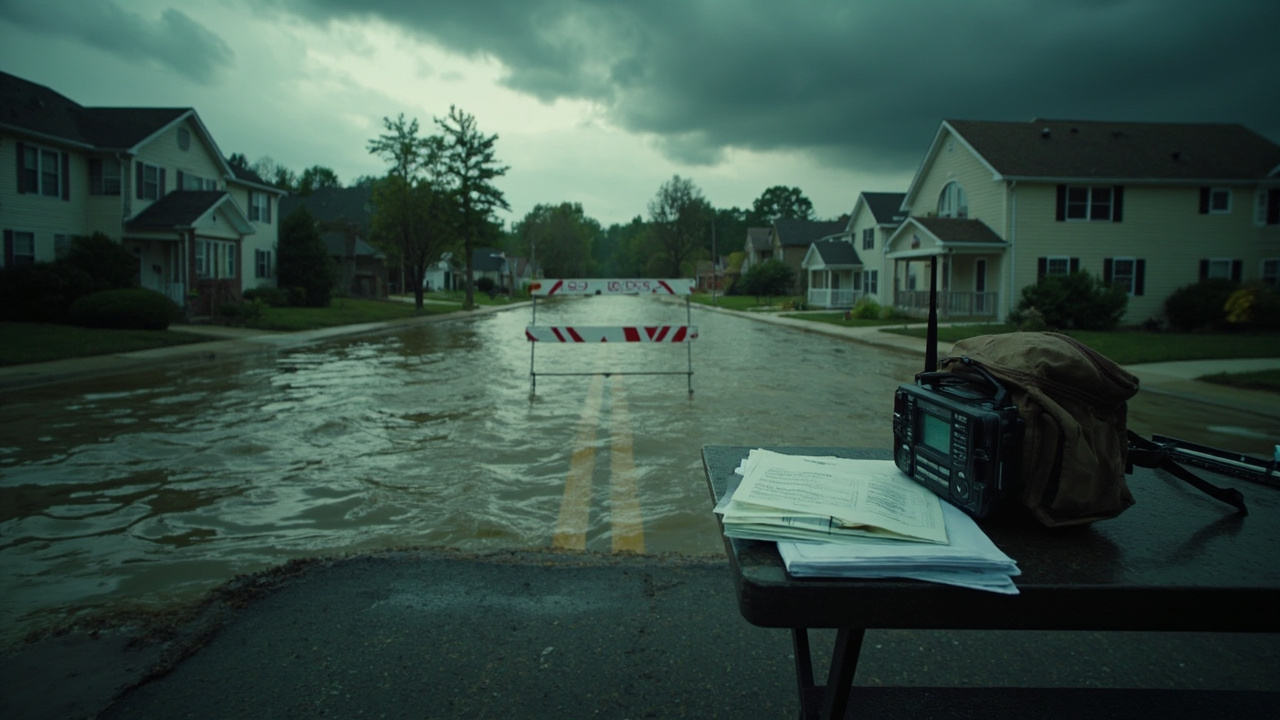
TL;DR: If you are under a flood warning, find safe shelter right away and never walk, swim or drive through flood water.
Flooding is a temporary overflow of water onto land that is normally dry, and federal emergency managers describe floods as the most common disaster in the United States, according to Floods | Ready.gov. Failing to evacuate flooded areas or entering flood water can lead to injury or death. Floods may result from rain, snow, coastal storms, storm surges and overflows of dams and other water systems. They can develop slowly or quickly, and flash floods can come without warning. Documented effects include outages, disrupted transportation, damaged buildings and landslides.
Household protection starts with understanding that risk is not confined to mapped zones. Visit FEMA's Flood Map Service Center to learn types of flood risk in your area, while remembering that flooding does not follow lines on a map, according to Floods | Ready.gov. Where it rains, it can flood. Residents are advised to sign up for their community's warning system. The Emergency Alert System, NOAA Weather Radio and local alerting systems provide emergency alerts and current emergency information and instructions regarding flooding. The National Risk Index is described as an easy-to-use, interactive tool that shows which communities are most at risk to natural hazards like flooding.
Why flood water is deadly in cars and on foot
Each year, more deaths occur due to flooding than from any other thunderstorm related hazard, according to Turn Around Don't Drown®. The Centers for Disease Control and Prevention reports that over half of all flood-related drownings occur when a vehicle is driven into hazardous flood water. The next highest percentage of flood-related deaths is due to walking into or near flood water.
People underestimate the force and power of water, and many deaths occur in cars swept downstream. Many of these drownings are preventable. Never drive around barriers blocking a flooded road, because the road may have collapsed under that water.
Federal safety thresholds explain why even shallow water is dangerous. Just six inches of moving water can knock you down, and one foot of moving water can sweep your vehicle away, according to Floods | Ready.gov. The National Weather Service adds detail: a mere 6 inches of fast-moving flood water can knock over an adult, it takes just 12 inches of rushing water to carry away most cars, and just 2 feet of rushing water can carry away SUVs and trucks, according to Turn Around Don't Drown®. It is never safe to drive or walk into flood waters.
Flood insurance and documents need action well before water rises
Homeowner's insurance policies do not cover flooding, according to Floods | Ready.gov. Residents can get flood coverage under FEMA's National Flood Insurance Program. It typically takes up to 30 days for a policy to go into effect, so the time to buy is well before a disaster. The program now offers a path to get a personalized quote and purchase a policy online through floodsmart.gov/policy-quote.
The National Weather Service Alaska region reinforces the same insurance point, noting that standard homeowners insurance does not cover flooding and that flood insurance requires a thirty-day waiting period, according to Flood Safety and Preparedness. That office also advises households to make an itemized list of personal property well in advance and to photograph or video the interior and exterior of the home. Keep insurance, important documents and other valuable items in a safe deposit box.
For everyday household readiness, keep important documents in a waterproof container and create password-protected digital copies, according to Floods | Ready.gov. Protect property by moving valuables to higher levels. Declutter drains and gutters. Install check valves. Consider a sump pump with a battery.
Make a household plan, supplies and evacuation routes
Make a plan for your household, including your pets, so everyone knows what to do, where to go and what will be needed to protect against flooding, according to Floods | Ready.gov. Learn and practice evacuation routes, shelter plans and flash flood response. Gather supplies, including non-perishable foods, cleaning supplies and water for several days, in case you must leave immediately or if services are cut off in your area.
Preparation also includes a family disaster plan with a communications plan and list of contacts, according to Flood Safety and Preparedness. Assemble a disaster supplies kit. Find out where you can go if ordered to evacuate. Make a keep-in-touch arrangement with relatives and friends.
Know the meaning of alerts. A flood watch means floods are possible, while a flood warning means flooding will occur soon and residents should move to higher ground. A flash flood warning means flooding is occurring and people should seek higher ground immediately and listen to local officials. Wireless Emergency Alerts for flash flood warnings are available on most smartphones. NOAA All Hazards Radio is another way to receive emergency information.
When flooding threatens your neighborhood
When a flood threatens, keep informed of where flooding is expected or occurring through National Weather Service websites, including weather.gov, water.weather.gov/ahps and mobile.weather.gov, according to Flood Safety and Preparedness. Listen to radio and television outlets, including NOAA Weather Radio, and check the internet and social media for information and updates as well.
Get out of areas subject to flooding, including dips, low spots and floodplains. If forced to leave property and time permits, move essential items to safe ground, fill tanks to keep them from floating away and grease immovable machinery. Store a supply of drinking water in clean bathtubs and in large containers.
If you are under a flood warning, find safe shelter right away. Depending on the type of flooding, the required action may be to evacuate if told to do so, move to higher ground or a higher floor, or stay where you are, according to Floods | Ready.gov. Stay off bridges over fast-moving water, because fast-moving water can wash bridges away without warning.
What to do during a flood
Evacuate immediately if told to evacuate, according to Floods | Ready.gov. Never drive around barricades, which local responders use to safely direct traffic out of flooded areas. Obey evacuation orders, and if told to evacuate do so immediately, lock the home when leaving and, if there is time, disconnect utilities and appliances, according to Flood Safety and Preparedness.
Do not walk, swim or drive through flood waters. Turn Around. Don't Drown. Stay inside the car if it is trapped in rapidly moving water, and get on the roof if water is rising inside the car. Get to the highest level if trapped in a building. Only get on the roof if necessary and once there signal for help. Do not climb into a closed attic, to avoid getting trapped by rising floodwater.
Avoid areas subject to sudden flooding. Stay off bridges over fast-moving water. Keep children from playing in floodwaters or near culverts and storm drains. If sick and in need of medical attention, contact a healthcare provider, wait for further care instructions and shelter in place if possible, and call 9-1-1 for a medical emergency.
How to return and clean up safely after water recedes
Pay attention to authorities for information and instructions, and return home only when authorities say it is safe, according to Floods | Ready.gov. Avoid driving except in emergencies. Be aware that snakes and other animals may be in the house.
Wear heavy work gloves, protective clothing and boots during cleanup and use appropriate face coverings or masks if cleaning mold or other debris. People with asthma and other lung conditions or immune suppression should not enter buildings with indoor water leaks or mold growth that can be seen or smelled. Children should not take part in disaster cleanup work.
Avoid wading in floodwater, which can be contaminated and contain dangerous debris. Underground or downed power lines can electrically charge the water. Be aware of the risk of electrocution. Do not touch electrical equipment if it is wet or if standing in water. Turn off the electricity to prevent electric shock if it is safe to do so. Do not handle live electrical equipment in wet areas, and electrical equipment should be checked and dried before being returned to service, according to Flood Safety and Preparedness. Use a generator or other gasoline-powered machinery only outdoors and away from windows.
After a flood, boil drinking water before using it. If fresh food has come in contact with floodwaters, throw it out. Seek necessary medical care at the nearest hospital. Food, clothing, shelter and first aid are available at Red Cross shelters. Use flashlights, not lanterns or torches, to examine buildings, because flammables may be inside.