TL;DR: Household resilience today means a written family plan, a maintained emergency kit, and practiced actions for power loss, severe weather, and evacuation.
Households are shifting from stockpiling alone to planning together, maintaining supplies, and practicing what to do when phones, power, and roads fail. Guidance from Ready.gov and the American Red Cross points to the same conclusion: a simple written plan plus a kit you actually rotate and use matters more than a large closet of forgotten gear.
What changed: plan first, then supplies
The most practical shift in household preparedness is order of operations. Start with people, then places, then things.
According to Ready.gov, a household plan should document how family members will contact each other, where they will meet, and what they will do for shelter, evacuation, and communication. That advice is published in the Ready.gov planning guides at https://www.ready.gov/plan.
The American Red Cross makes a parallel point in its survival kit and preparedness guidance at https://www.redcross.org/get-help/how-to-prepare-for-emergencies/survival-kit-supplies.html: assemble supplies, personalize them for household needs, and keep them ready to grab.
In practice, that means writing down out-of-area contacts, meeting spots inside and outside the neighborhood, work and school pickup rules, and medical and mobility needs before buying more containers.
Build a household communication plan that works without cell service
Communication fails in many emergencies. Towers overload, batteries die, and family members scatter across home, work, and school.
A resilient household communication approach includes:
Choose contacts and meeting places in writing
Designate one out-of-town contact everyone can text or call to check in. Pick two meeting places — one near home and one outside the immediate area — in case streets close.
According to Ready.gov, households should plan for different times of day and different locations, because emergencies rarely happen when everyone is together. The full planning worksheet is available through Ready.gov at https://www.ready.gov/plan.
Write the numbers on paper. Children, older adults, and caregivers should carry a card with names, phone numbers, addresses, medical notes, and the out-of-town contact.
Plan for low-power messaging
Agree on simple check-in language. A short message such as safe, need help, or heading to meeting spot reduces confusion and saves battery.
Keep a portable charger stored with charge, keep car chargers available, and teach everyone how to reduce battery drain. Keep a battery-powered or hand-crank radio in the kit for official instructions when mobile data is unavailable, a step emphasized in American Red Cross preparedness materials published at https://www.redcross.org/get-help/how-to-prepare-for-emergencies/survival-kit-supplies.html.
Assemble a kit you can carry, shelter with, and rotate
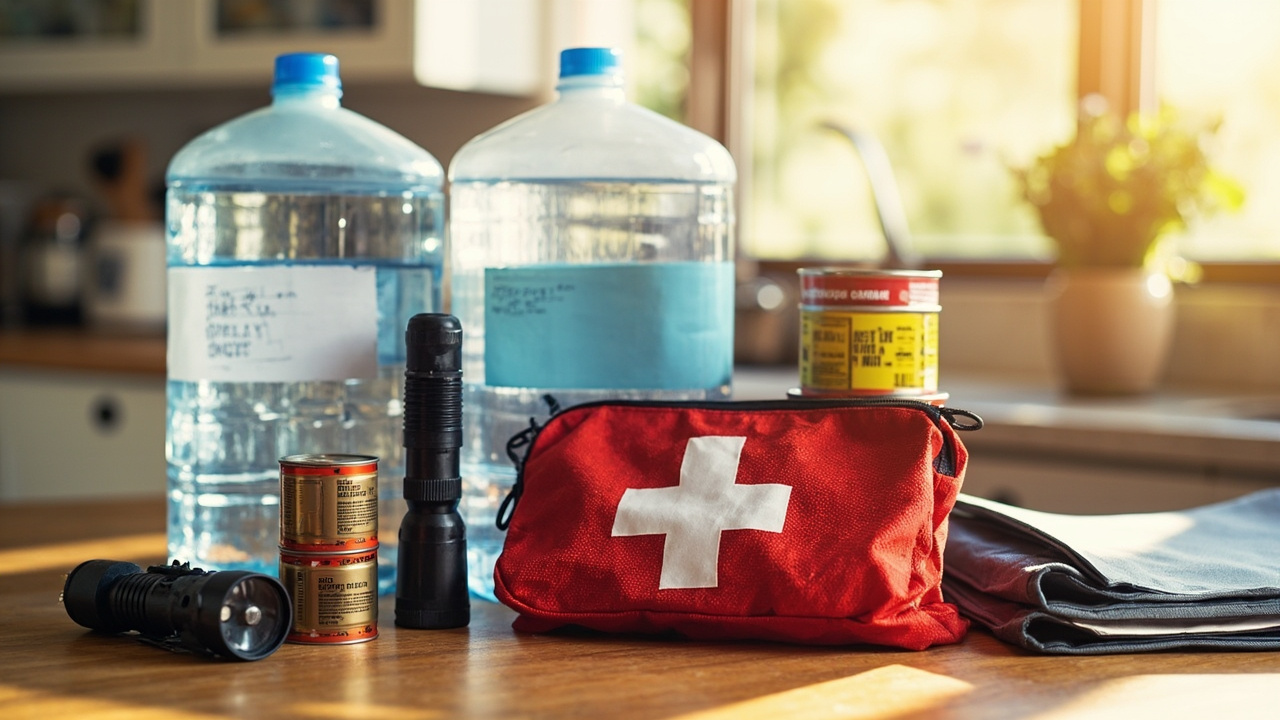
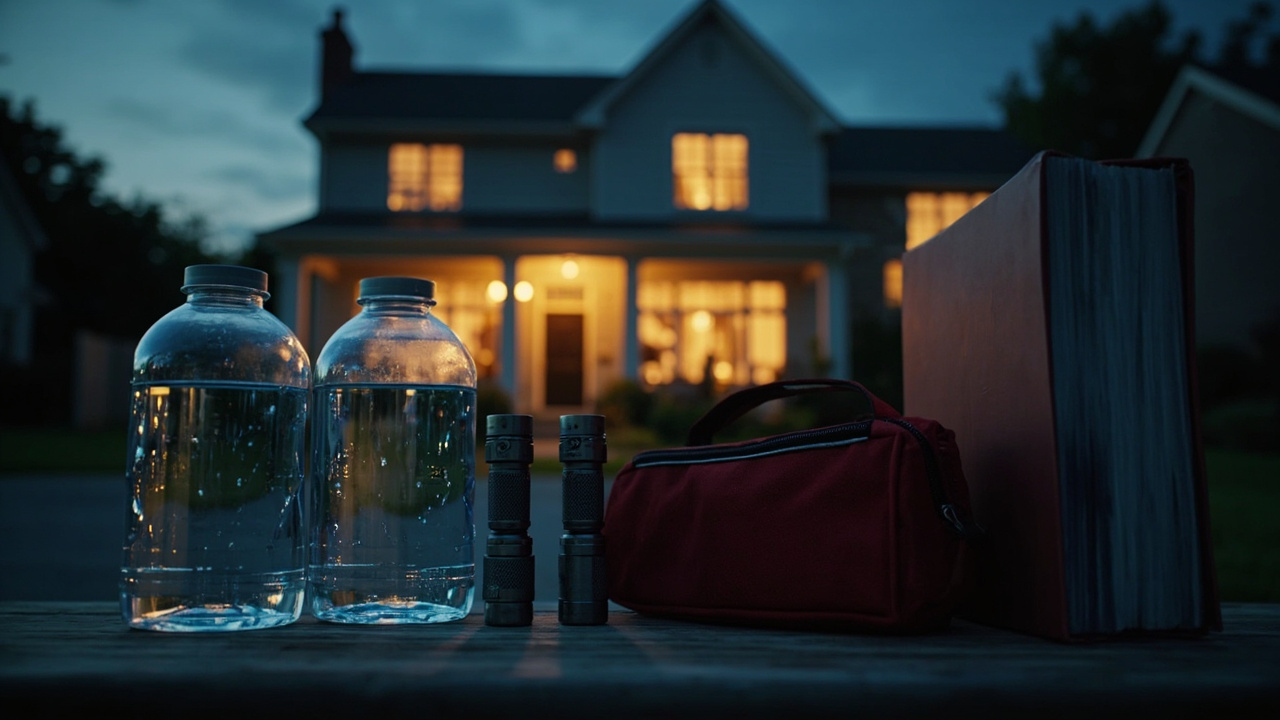
A kit does not need to be elaborate to be useful. It needs to cover drinking water, food that needs little or no preparation, light, warmth, first aid, hygiene, documents, cash, and tools for information and minor repairs.
Water and food for real households
According to Ready.gov, households should store water and ready-to-eat food as the foundation of an emergency supply kit, with additional consideration for infants, older adults, and people with dietary or medical needs. Details are listed in the Ready.gov kit guidance at https://www.ready.gov/kit.
The American Red Cross similarly advises households to keep water, nonperishable food, and a manual opener accessible, along with supplies for babies and pets where relevant, as described at https://www.redcross.org/get-help/how-to-prepare-for-emergencies/survival-kit-supplies.html.
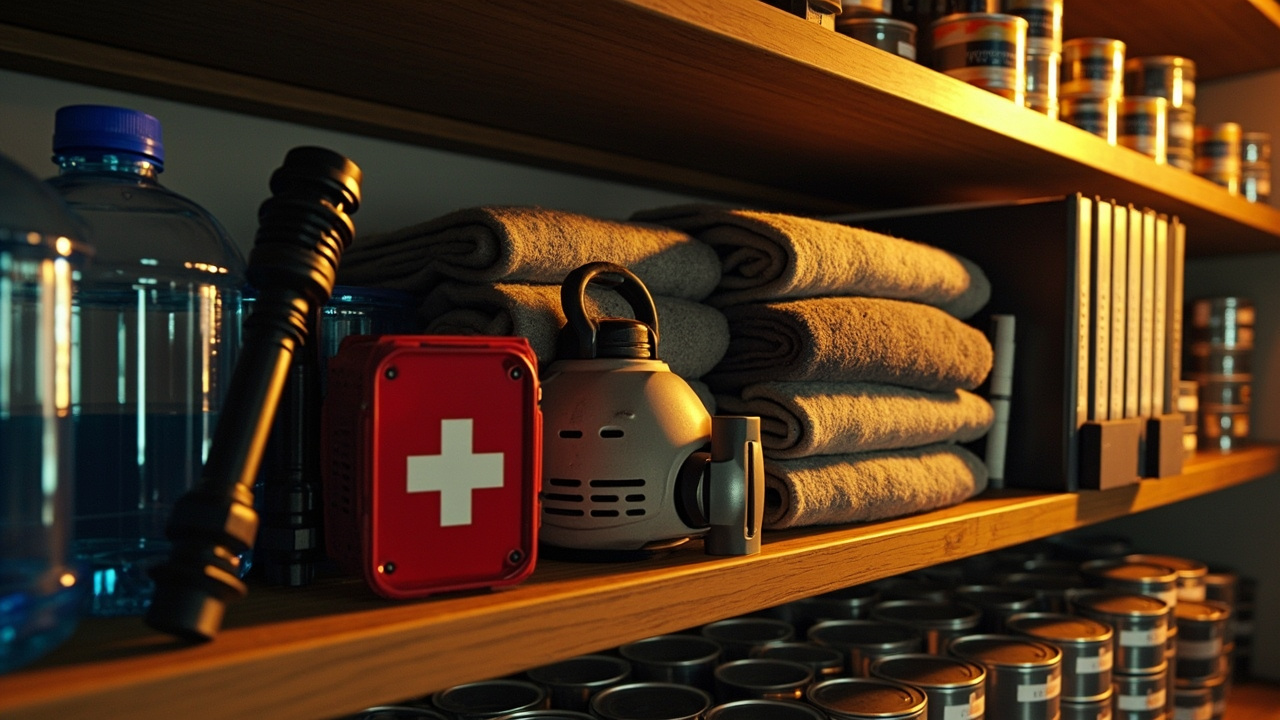
For household use, focus on foods the family already eats that store well without refrigeration, plus a way to open, serve, and clean up without full kitchen function. Store items in clean, sealed containers in a cool, dark place. Mark rotation dates on a household calendar and use and replace items through normal meals so nothing expires unnoticed.
Keep feeding needs for infants, medication schedules tied to meals, allergies, and pet food in the same plan. If someone uses medical nutrition or specific dietary staples, keep a reserve and a written list of equivalents.
Light, warmth, air, and shelter
Power loss turns a familiar home unfamiliar after dark. Keep flashlights where they can be found by touch, with spare batteries stored separately from devices to reduce corrosion risk. Headlamps free hands for stairs, children, and shutoffs.
Keep blankets or sleeping bags accessible, not buried in seasonal storage. Keep plastic sheeting and tape for broken windows or drafts only where household members can use them safely, with ventilation always preserved around combustion sources.
Never use grills, camp stoves, or generators indoors or in attached garages. Keep fuel-powered equipment outside and away from windows and vents, and follow manufacturer instructions for safe placement and cooldown.
Health, hygiene, and medications
A household kit should support basic first aid, prescription continuity, vision needs, and sanitation when plumbing or services pause.
According to Ready.gov, emergency kits should include first aid materials, prescription medications, glasses or contacts, and personal hygiene items tailored to household members. That checklist appears in the Ready.gov kit guidance at https://www.ready.gov/kit.
The American Red Cross also lists first aid, medications, hygiene supplies, and infant and medical needs among core kit categories at https://www.redcross.org/get-help/how-to-prepare-for-emergencies/survival-kit-supplies.html.
Keep a written medication list with names, doses, prescribers, and pharmacy contacts. Ask clinicians and pharmacists in advance about refill timing, storage, and what to do if a dose is missed during disruption. Keep spare glasses, hearing-aid batteries where needed, and comfort items for children.
For sanitation, keep hand sanitizer, soap, wipes, trash bags, toilet paper, and a small bucket with liners for emergency use. Keep diapers, menstrual supplies, and incontinence supplies in sufficient household quantities and rotate them.
Keep documents, money, and keys ready to go
When evacuation orders come, there is little time to search for paperwork.
Keep copies of identification, insurance policies, medical cards, prescriptions, bank and utility contacts, leases or deeds, and pet vaccination records in a sealed waterproof folder in the go-kit, with backups stored securely out of the home where the household can retrieve them.
Keep a small amount of cash in small bills for transit, fuel, food, or supplies when card readers are down. Keep house and vehicle keys together. Keep a written contact sheet for schools, workplaces, caregivers, landlords, insurers, and utilities.
Photograph rooms and valuable items for insurance purposes during calm weather and store those images securely outside the home.
Prepare the home for wind, water, winter, and wildfire smoke
Household resilience is not only a kit. It is valves, vents, drains, and clearances.
Know how to shut off water, gas, and electricity safely, and label valves and breakers so any adult in the home can find them. Keep the tools needed for shutoff with the labels, not in a distant toolbox.
Keep gutters, drains, and sump systems clear where the household is responsible for them. Keep a small supply of sandbags, tarps, or water barriers only if household members know how to place them without injury.
For winter storms, keep warm clothing, blankets, and safe alternative light sources ready, and keep pantry foods that can be eaten without cooking. For wildfire smoke, keep windows and doors well-sealed where possible, know how to set heating and cooling to recirculate according to manufacturer directions, and keep well-fitting respirators stored for trips outside when authorities advise protections.
Trim vegetation and clear combustibles from near structures where local rules allow, keep important outdoor items secured before forecast wind, and park vehicles facing outward when evacuation may be needed.
Practice evacuation and shelter-in-place as two separate skills
Many households prepare for one scenario and freeze in the other. Practice both.
For evacuation, map two routes out of the neighborhood and one route out of the region. Keep fuel levels sufficient for departure without a fuel stop. Keep carriers, leashes, food, and records ready for pets, because shelter options vary. Agree in advance who transports children, older adults, and neighbors who need assistance.
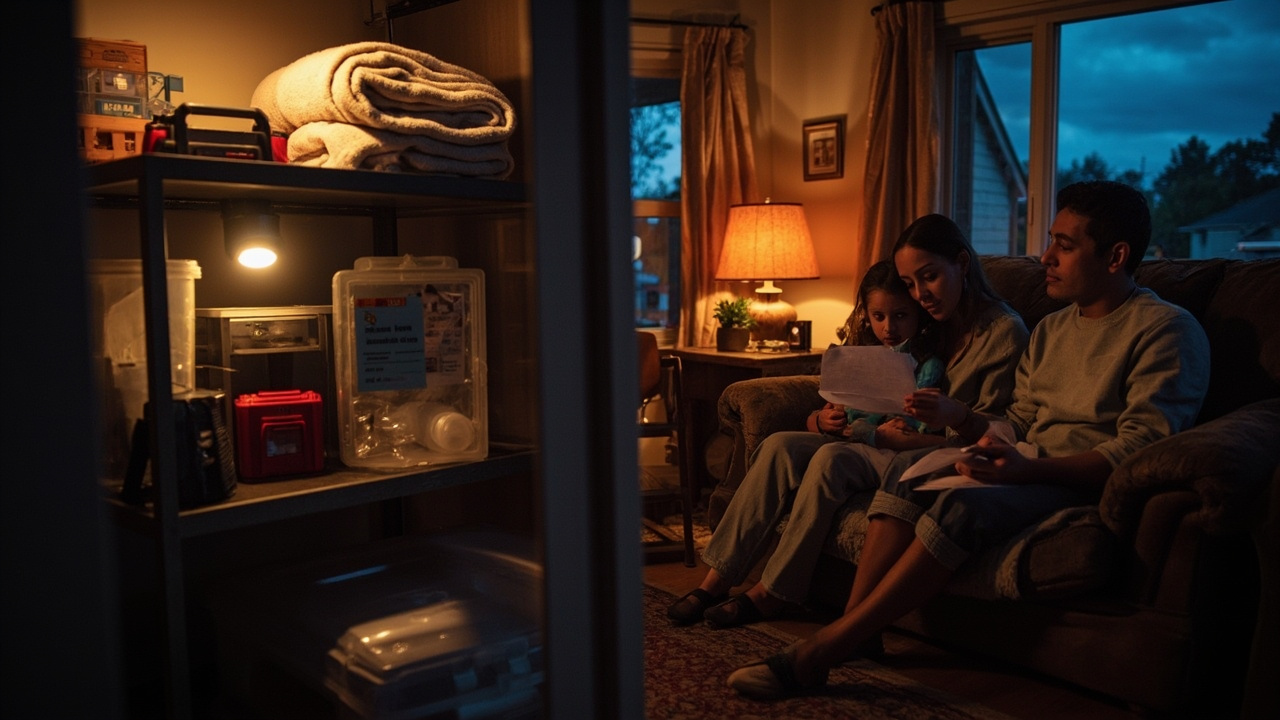
For shelter-in-place, choose an interior room appropriate to the hazard, keep supplies for that room together, and know how to get official information without relying on social feeds. Keep a radio, charger, light, water, snacks, medications, and comfort items staged for that room during watches and warnings.
According to Ready.gov, households should understand local alerts and warnings and know the difference between actions such as evacuation and sheltering, as explained through Ready.gov planning resources at https://www.ready.gov/plan.
The American Red Cross also encourages households to learn community evacuation routes and shelter information ahead of time, as noted in its preparedness guidance at https://www.redcross.org/get-help/how-to-prepare-for-emergencies/survival-kit-supplies.html.
Include children, older adults, and pets by name
Generic kits fail real households because needs differ by person and by animal.
For children, pack familiar snacks, water, a change of clothes, a blanket, a flashlight sized for small hands, and a comfort object. Include a contact card and a recent photo. Practice what to do at school and on the bus, not only at home.
For older adults and people with disabilities, plan around mobility, power-dependent devices, communication needs, and transportation. Keep a written list of equipment, model numbers, power requirements, and backup options. Arrange in advance with neighbors, aides, and paratransit where available.
For pets, keep food, water, bowls, leashes, carriers, waste bags, medications, and vaccination records together. Keep a photo of each animal with the owner for identification if separated. Plan where animals will stay if public shelters have restrictions.
Maintain the system with seasonal checks
A kit is a living household system. Without maintenance, batteries corrode, food expires, clothes no longer fit, and documents go stale.
Tie kit checks to existing seasonal routines. Inspect flashlights and radios, test chargers, replace stored batteries, rotate food and water through normal use, update clothing sizes, refresh hygiene supplies, and update documents and contact cards.
Walk the home twice a year to confirm shutoff labels, extinguisher placement, detector function, and exit paths. Confirm that every adult and teen knows how to use extinguishers, shutoffs, and the radio. Replace detector batteries according to manufacturer directions and local program guidance.
According to Ready.gov, emergency supplies should be reviewed and updated regularly so kits stay ready and personalized, a maintenance point included in the Ready.gov kit guidance at https://www.ready.gov/kit.
Connect to neighbors and local alerts
No household is fully resilient alone. Neighbors share tools, transportation, skills, and information.
Sign up for local emergency alerts and weather warnings where offered by city or county agencies. Learn how schools, workplaces, and care facilities will notify families. Introduce the household to immediate neighbors and exchange contact information and key needs, such as who has a generator, who needs power for medical devices, who can help with evacuation, and who checks on pets.
Keep a paper map of the area in the kit. When navigation apps fail or roads close, a marked paper map with routes, meeting spots, fuel, pharmacies, and shelters supports clear decisions.
Household resilience today is less about fear and more about function. A written plan, a rotated kit, practiced evacuation and sheltering, and connected neighbors turn disruption into a sequence of manageable steps, exactly the approach described by Ready.gov at https://www.ready.gov/kit and the American Red Cross at https://www.redcross.org/get-help/how-to-prepare-for-emergencies/survival-kit-supplies.html.