TL;DR: The next questions for household resilience are whether your household can communicate, sustain itself, and act together during the first days of a disruption.
Households build resilience by making a communication plan, assembling emergency supplies, learning local risks, and practicing what to do together. Guidance from Ready.gov centers on knowing household needs, assigning responsibilities, and keeping information current. Guidance from the Federal Emergency Management Agency centers on preparedness actions organized before, during, and after an event. Together, those two frameworks answer the central question facing households now: what should be decided in calm conditions so decisions are not improvised during an emergency.
What does a household communication plan need to cover?
A household plan identifies how members contact each other when phones, power, or travel routes are disrupted. According to Ready.gov, a basic plan records contact numbers, meeting places, and out-of-area contacts for every member of the home.
Choose two meeting places. Select one place near home for sudden events that require leaving quickly. Select one place outside the neighborhood for events that block local streets or require a longer absence.
Designate an out-of-area contact. A relative or friend in another area can relay messages when local lines are busy or local service is limited. Every household member should carry that contact number in a wallet card and stored in a mobile phone.
Assign roles for children, older adults, and household members with disabilities or medical needs. According to Ready.gov, plans should account for mobility assistance, medication schedules, medical equipment power needs, and transportation help.
Keep the plan written and accessible. Store a paper copy in an emergency folder and a digital copy in a secure location. Review contact numbers, meeting places, school pickup rules, and workplace reunification rules on a regular schedule.
How should households assemble and store supplies?
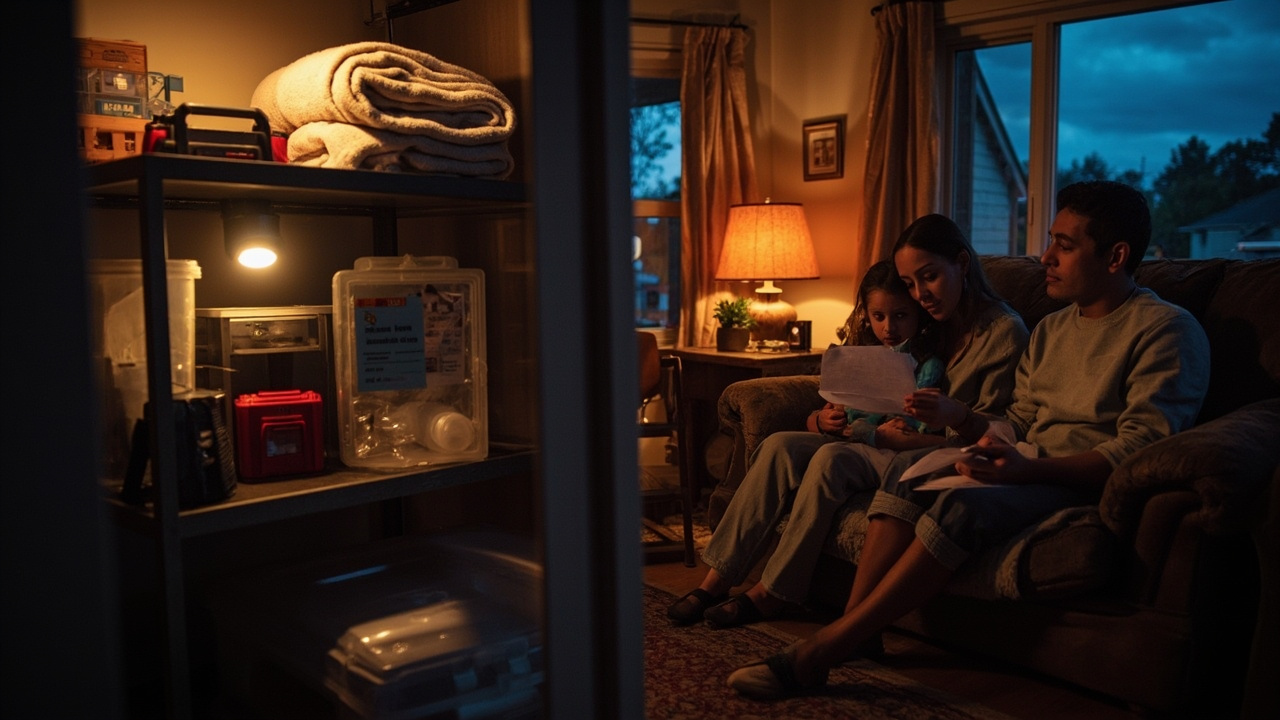
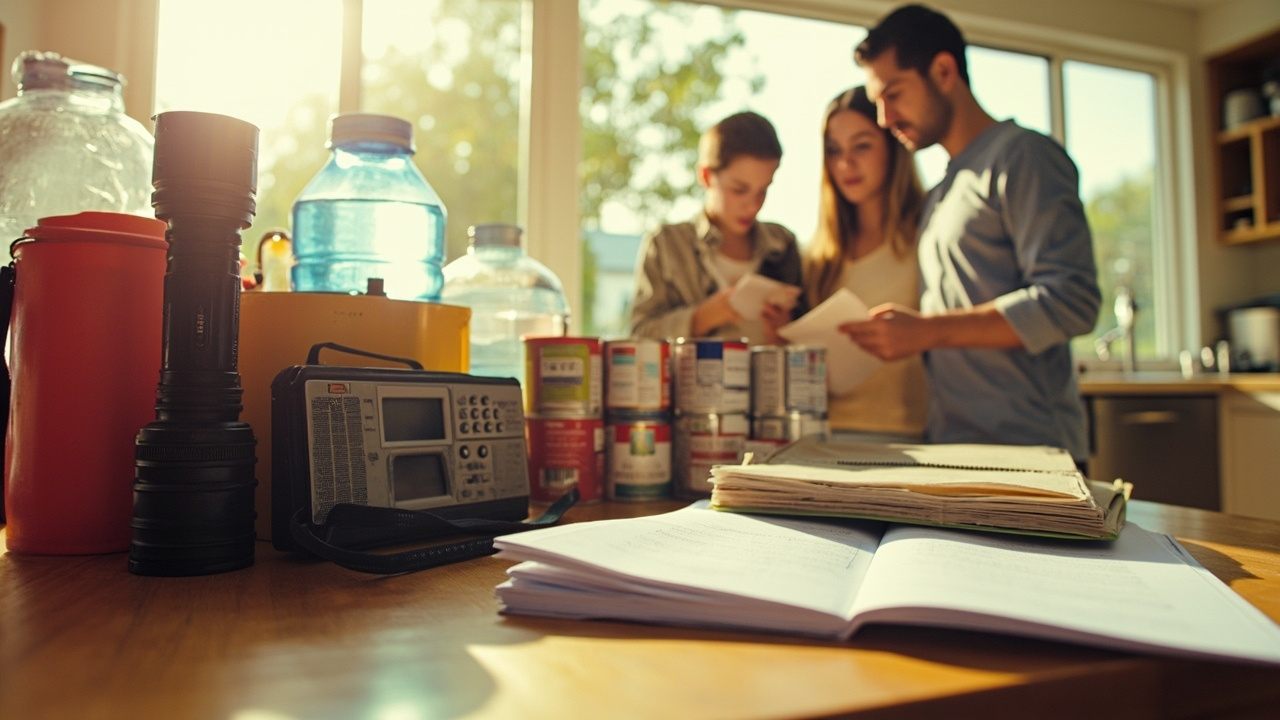
Emergency supplies allow a household to remain safe at home or to leave quickly with essential items. According to Ready.gov, a basic emergency supply kit includes water, food, communication tools, light sources, first aid materials, and copies of important documents.
Store drinking water for household needs. Keep bottled water in a cool location and rotate supplies to maintain freshness. Include cups, a manual can opener, and basic utensils for food preparation without power.
Store ready-to-eat foods that household members will eat under stress. Include foods suitable for infants, older adults, and household members with dietary restrictions. Include food for pets and service animals that live in the home.
Pack lighting and power support. Include flashlights, extra batteries, and portable chargers for mobile phones. Keep battery supplies together so they can be located in darkness.
Pack a first aid kit and hygiene supplies. Include bandages, antiseptic, prescription medications, glasses or contact lens supplies, soap, hand sanitizer, and moist towelettes. Include diapers, formula, and care items where infants are present.
Keep copies of identification, insurance policies, medical records, prescriptions, bank information, and household leases or deeds. According to Ready.gov, important documents should be stored in a waterproof container and backed up in a secure digital location.
Organize supplies in two layers. Maintain a stay-at-home supply area for sheltering in place. Maintain a packed go-bag for evacuation with water, snacks, change of clothes, medications, chargers, cash in small bills, and document copies.
What local risks should shape household decisions?
Household resilience depends on understanding hazards that affect a specific address. According to the Federal Emergency Management Agency, local emergency managers publish hazard information, evacuation routes, shelter locations, and alert systems for their jurisdictions.
Learn how local officials issue alerts. Many counties and cities operate text alerts, sirens, radio broadcasts, and wireless emergency messages. Register mobile phones for local alert systems and enable emergency alerts on mobile devices.
Learn evacuation routes and shelter options for home, school, and work locations. Identify multiple routes from home to higher ground or outside a hazard area. Identify where public shelters accept pets or where pet-friendly lodging is located.
Learn utility shutoff locations and safe operation. Identify the main water valve, electrical panel, and gas shutoff. Keep needed tools near shutoff points and ensure responsible adults understand safe procedures and when professional help is required.
Consider seasonal hazards in household planning. Households in coastal and river areas prepare for flooding and storms. Households in dry and wooded regions prepare for wildfire smoke and evacuation readiness. Households in cold regions prepare for heating loss and travel disruption.
How do households protect power, water, and food during outages?
Power loss affects lighting, heating, cooling, refrigeration, communication, and medical equipment. Prepare alternative light sources and charging options before an outage begins.
Keep refrigerator and freezer doors closed during outages to preserve cold temperatures. Discard perishable foods that show signs of spoilage. When in doubt about safety, discard the item rather than tasting it to check condition.
Use generators and cooking equipment with attention to ventilation and fire safety. Never operate fuel-burning equipment indoors or in attached garages. Keep fuel stored safely outside living areas and away from ignition sources.
Maintain safe water practices when supply quality is uncertain. Follow boil-water notices and treatment instructions from local water authorities. Use bottled water for drinking, cooking, brushing teeth, and preparing infant formula when officials advise it.
Support medical devices that require power. Talk with health providers about backup power options, battery duration, manual alternatives, and emergency contacts. Label equipment with operating instructions for caregivers who may assist during an outage.
How should households plan for children, older adults, and pets?
Resilience planning starts with the people and animals who need the most support. According to Ready.gov, emergency plans should list medications, allergies, medical providers, assistive devices, and daily support routines for each household member.
Prepare a comfort and care kit for children. Include familiar snacks, water, a change of clothes, blankets, books, games, and contact cards with caregiver numbers. Practice calm reunification steps so children know where to go and whom to follow at school or childcare.
Prepare support for older adults and household members with chronic conditions. Keep a current medication list with dosages, pharmacy numbers, and provider contacts. Pack extra medications, mobility aids, hearing aid batteries, and eyeglasses in go-bags.
Prepare for pets and service animals. Pack leashes, carriers, food, water, bowls, waste bags, vaccination records, and identification tags. Plan transport for large animals and confirm shelter or lodging rules for animals before evacuation is needed.
Coordinate with neighbors and caregivers. Share spare keys, gate codes, and emergency contacts with trusted neighbors. Confirm who can check on household members or feed animals when the primary caregiver is away.
What financial and document readiness do households need?
Households recover faster when records and resources are organized. According to the Federal Emergency Management Agency, document protection and financial readiness are core parts of preparedness alongside supplies and planning.
Photograph rooms, valuables, and home conditions for insurance purposes. Store images in a secure digital location away from home. Keep policy numbers, agent contacts, and claim instructions with emergency documents.
Keep emergency cash in small denominations. Electronic payment systems may be unavailable during power and network outages. Store cash securely with go-bags and emergency folders.
Protect records from water, fire, and loss. Use waterproof folders or sealed bags for paper copies. Encrypt sensitive digital files and use strong passwords for cloud storage accounts.
Review insurance coverage for home, renters, flood, and auto policies. Understand deductibles, exclusions, documentation requirements, and claim deadlines. Update coverage after moves, renovations, or major purchases.
How often should households practice and update readiness?
Plans lose value when contacts change, supplies expire, or members forget procedures. According to Ready.gov, households should review and practice plans on a routine basis and after major life changes.
Schedule a household review twice per year. Update phone numbers, medical information, school contacts, work contacts, meeting places, and pet care instructions. Replace expired food, water, batteries, and medications.
Practice evacuation and shelter-in-place drills. Walk evacuation routes with children and test go-bags for weight and completeness. Practice sheltering in an interior room without windows for severe weather scenarios.
Test smoke alarms and carbon monoxide alarms according to manufacturer instructions. Replace batteries and devices as directed. Keep fire extinguishers accessible and ensure adults understand basic operation.
Refresh skills and training. Consider first aid, cardiopulmonary resuscitation, and community emergency response training offered by local organizations. Include teenagers and young adults in age-appropriate training so more members can help.
What community connections strengthen a household?
No household prepares in isolation. According to the Federal Emergency Management Agency, coordination with neighbors, workplaces, schools, and volunteer groups improves preparedness and recovery for entire neighborhoods.
Learn school, workplace, and childcare emergency policies. Keep authorization forms current so approved adults can pick up children when parents cannot arrive. Confirm reunification sites and identification requirements in advance.
Connect with local volunteer and neighborhood groups. Community teams often share training, check on isolated residents, and support shelters during extended events. Participation builds familiarity before help is needed.
Share preparedness information without sharing sensitive details. Discuss meeting places, transportation help, and backup childcare with trusted contacts. Keep financial details, passwords, and document copies private.
Support inclusive preparedness for neighbors with limited English, limited transportation, or limited resources. Translated materials, ride coordination, and shared supply knowledge strengthen resilience for the whole block while protecting household privacy.
Sources referenced
- Ready.gov - Build a Kit (https://www.ready.gov/kit) informed this article's reporting and source checks.