TL;DR: Verify the source, the date, and the official guidance before you buy, store, or act on any household resilience claim.
Check official pages first when a preparedness claim tells you to act. If a post tells you to evacuate, to shelter, to boil water, or to change what you store at home, pause and open the official emergency management page for your area. According to Ready.gov, household preparedness guidance is maintained for public use, and that collection is the place to confirm what to do at home. According to FEMA Rumor Control, disaster rumors are addressed directly so residents can check whether a viral claim is accurate. Use those two collections as your confirmation step before sharing or following instructions.
Confirm who published the claim
Look for the original publisher
Trace every claim back to the page that first published it. Screenshots, forwarded messages, and short clips often remove the publisher name, the posting time, and the link to the full notice. Open the profile or page, read the account name carefully, and look for impersonation signals such as extra words, altered spelling, or missing verification markers. If you cannot find the original post on an official account or official website, treat the claim as unverified.
Visit the official website by typing the address yourself rather than tapping a forwarded link. Look for pages about emergency kits, family communication plans, evacuation, shelter, and local alerts on Ready.gov. Look for rumor-response pages and disaster information pages on FEMA Rumor Control at https://www.fema.gov/disaster/recover/rumor-control. Compare the wording on the official page with the wording in the viral post. If the official page does not contain the instruction, do not act on the viral version.
Check whether a local agency confirms it
Household actions often depend on local conditions, utility service, road access, and shelter availability. A national post cannot confirm a local shelter opening, a local water notice, or a local evacuation boundary. Check your city emergency management office, county emergency management office, public health department, water utility, and power utility. Look for matching street names, facility names, and service areas. If local agencies have not posted the same instruction, wait for local confirmation.
Be cautious with pages that borrow logos, colors, and alert formatting. Visual design does not prove authority. Confirm the web address, the account handle, and the contact information. Call a published non-emergency number or use a listed contact form when a post asks for immediate household action and you cannot find confirmation elsewhere.
Confirm the date and the scope
Make sure the guidance is current
Old alerts resurface during every storm season. Check the publication date, the effective date, and any expiration language. A shelter notice from a prior event, a boil notice from a prior outage, or a road closure from a prior incident can circulate again with no updated context. If the post has no date, search the exact instruction text on the official site to find the current version.
Read the full notice rather than the headline. Headlines can omit limits on who should act, where the instruction applies, and how long it lasts. The first paragraph may urge action while a later paragraph limits that action to a neighborhood, a water system, or a time window. Apply the instruction only when your household falls inside the stated scope.
Match the hazard and the household setting
Confirm that the claim addresses your hazard and your housing situation. Guidance for renters, homeowners, apartment residents, well-water users, septic users, and households with medical devices can differ. A recommendation written for one hazard may not transfer to another hazard. A recommendation written for homeowners with yards and outbuildings may not transfer to apartment households. Read the intended audience section of the official page before adapting advice.
If guidance refers to maps, zones, or service areas, open the linked map and locate your address. Do not rely on a neighbor summary or a cropped map image. Boundaries can change from street to street. Confirm your zone entry, your utility provider, and your shelter assignment directly.
Verify household supply and storage claims
Check kit lists against Ready.gov
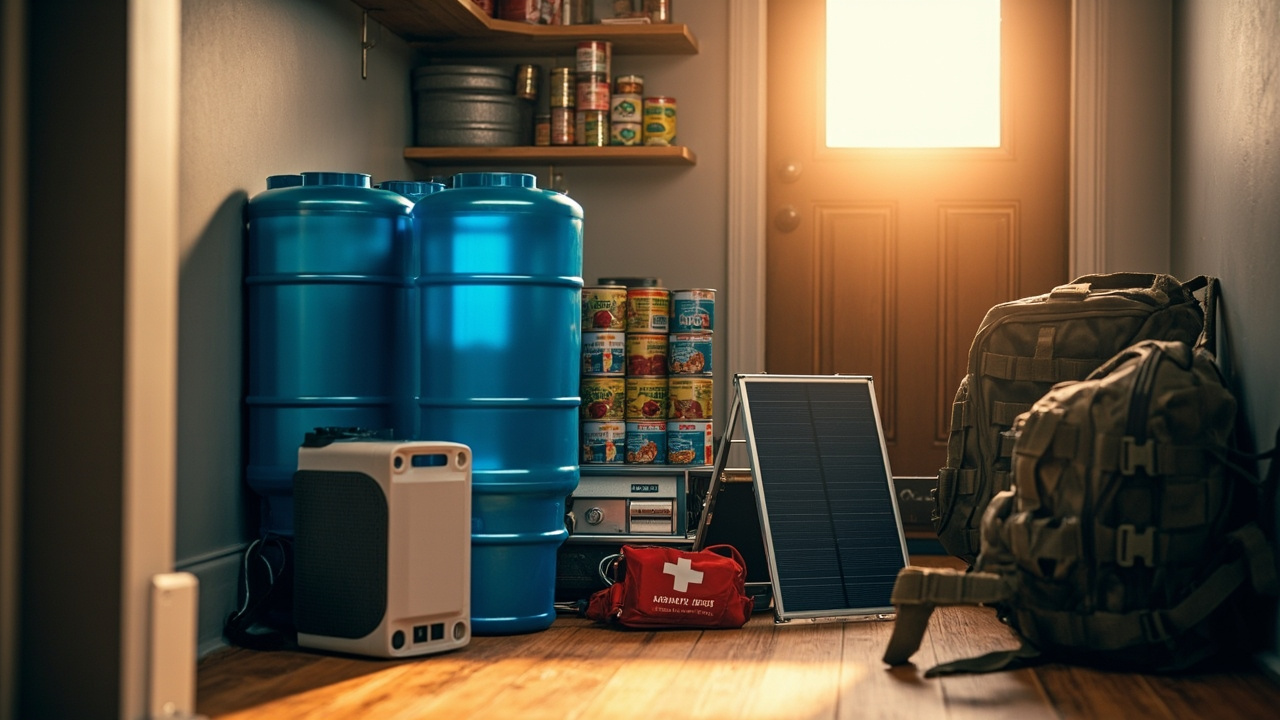
Supply lists spread quickly, and many add items that official guidance does not include. When a list claims that every home needs a particular product, compare it with the emergency kit information on Ready.gov at https://www.ready.gov/kit. Use the official list as the baseline for water, food, communication, lighting, first aid, documents, and comfort needs. Add personal items for infants, older adults, pets, and prescription needs only after you understand the baseline categories.
Watch for posts that present shopping links as preparedness requirements. A product recommendation is not the same as official guidance. Official household guidance describes categories of need and household planning actions rather than requiring one brand or one seller. If a post insists on a single product, check whether Ready.gov names that product. If it does not, treat the post as advertising rather than instruction.
Question storage, shelf life, and safety instructions
Food safety, water storage, fuel storage, battery storage, and medication storage require careful handling. Do not follow storage times, rotation advice, purification directions, or heating directions from an unsourced graphic. Look for handling instructions from your local public health department, water provider, utility, pharmacist, or clinician. Ask about containers, labeling, temperature, ventilation, and separation from living spaces when guidance involves fuel, batteries, or chemicals.
Keep documents and contact information current as part of verification. Review insurance papers, identification copies, medical summaries, prescriptions, veterinary records, school contacts, and workplace contacts. Store copies where household members can reach them during power loss and evacuation. Review access with everyone who may need to use the copies. Update the file when addresses, phone numbers, prescriptions, or caregivers change.
Verify communication and alert claims
Confirm how alerts will reach you
Many posts claim that a single app, channel, or page is the only official alert source. Confirm alert enrollment through your local emergency management office and national weather service office. Learn which systems require opt-in, which systems use location settings, and which systems work when power or mobile data fails. Test a battery-powered radio and review how household members will receive alerts overnight.
Build a written family communication plan that does not depend on one viral instruction. Write down out-of-area contacts, meeting places, school pickup arrangements, workplace check-in steps, and medical device power plans. Share the plan with all household members. Practice the plan so children, older adults, and caregivers know what to do when phones fail. Store a paper copy with your supplies.
Do not forward unconfirmed instructions
Forwarding can create demand surges, traffic congestion, and shelter confusion. Before you share, confirm the original source, the date, and the geographic scope. Share the official link rather than a screenshot. Include the publication time and the service area in your message. If you learn that a post was incorrect, correct it with the same audience and share the official correction link from FEMA Rumor Control.
Teach household members a simple pause routine. Stop when a message creates urgency. Open the official page. Check the date. Check the location. Check for local confirmation. Act only when all four checks align. This routine reduces impulsive buying, unsafe storage, and unnecessary travel.
Verify money, aid, and assistance claims
Check eligibility and application steps officially
Aid rumors spread after every major incident. Posts may promise payments, hotel coverage, home repair funds, or food benefits with little documentation. Confirm eligibility, deadlines, application methods, and required records through FEMA Rumor Control and your local assistance office. Do not pay a fee to apply for public assistance based on a social post. Do not share bank details, identification numbers, or property records with an account you found through a forwarded message.
Read the full application instructions before gathering documents. Official aid pages explain who may apply, what records help establish identity and residence, how inspections or reviews work, and how applicants receive decisions. Keep notes on confirmation numbers, submission dates, office locations, and follow-up contacts. If a post omits those steps, use the official page instead.
Watch for contractor and donation pressure
Storm-related fraud often arrives as door-to-door repair offers, donation requests, or cleanup services. Verify contractor licensing through your state or local licensing board. Ask for written estimates, proof of insurance, and local references. Avoid large advance payments and high-pressure sign-today language. Confirm charitable requests through established registries and the charity own website before sending money or supplies.
Photograph household conditions only when it is safe to do so and when official aid instructions request documentation. Store images with dates and descriptions. Keep receipts for emergency purchases, lodging, and repairs. Organize records by person, property, and expense type so follow-up requests do not delay review.
Build a household verification routine
Keep a short list of trusted pages
Maintain a written list of official pages for your home address, work address, school address, and caregiving addresses. Include emergency management, public health, weather service, utility, school district, and transportation pages. Bookmark the Ready.gov kit page and the FEMA Rumor Control page for quick comparison. Review the list seasonally and after any move, utility change, school change, or medical equipment change.
Store the list on paper as well as on phones. Power loss can block charging and mobile data. A paper list lets every household member find instructions without searching. Include phone numbers, radio frequencies used locally, shelter information sources, and meeting locations. Review the list during household meetings so everyone knows where to look first.
Practice low-information decision making
Plan for periods when official updates pause. Overnight hours, damaged towers, and overloaded websites can delay confirmation. Decide in advance what your household will do when information is incomplete. Stay in place when travel is uncertain. Conserve phone power. Listen to a battery-powered radio. Check on neighbors when it is safe. Avoid acting on a single unconfirmed post during quiet periods.
After each storm, outage, or false alarm, review what worked. Note which alert arrived first. Note which official page updated fastest. Note which supply was missing. Note which contact was unreachable. Update the communication plan, the supply list, and the trusted-page list based on that review. Keep changes small and written so the next event starts from a stronger baseline.
What to do when guidance conflicts
When two posts disagree, follow the more specific official source for your address. A county evacuation boundary outweighs a regional summary. A water utility notice for your system outweighs a general water tip. A school district dismissal notice outweighs a neighborhood rumor. When official sources conflict, contact the local agency directly and follow the instruction tied to your exact location.
When expert pages differ on household methods, look for points of agreement rather than adopting the most extreme advice. Official household resilience guidance emphasizes planning, communication, safe storage, and steady review. It does not require panic buying, hazardous stockpiling, or untested methods. Choose the conservative household action until official clarification arrives.